

April Fool’s marketing campaigns have evolved well beyond cheap pranks and weak gotcha moments. In 2026, the brands that won the day treated 1 April like a proper creative brief, and the results were some of the sharpest, funniest, and most strategically considered marketing the year has produced. Here’s a recap featuring the best ones.
Table of Contents:
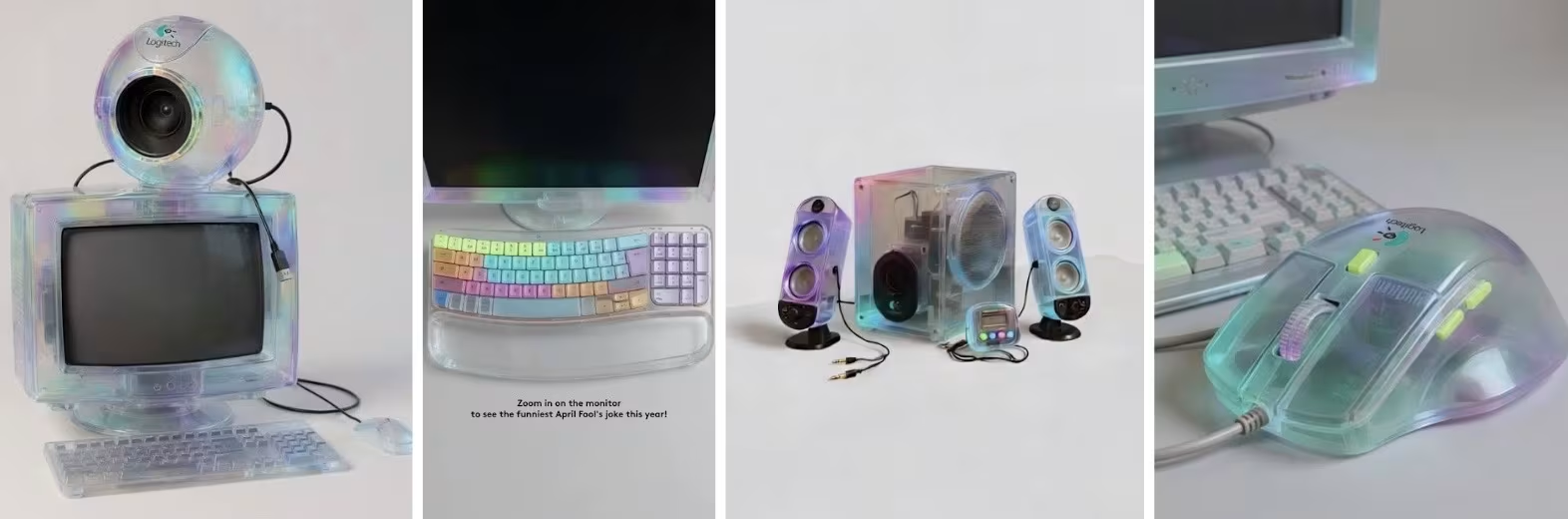
Logitech fielded two distinct April Fool’s concepts simultaneously. The first was a Y2K Office Collection: aesthetically pleasing chunky retro hardwares with iridescent translucent shells, early 2000s playful color palettes, and copy claiming, “A workflow that keeps you guessing.”
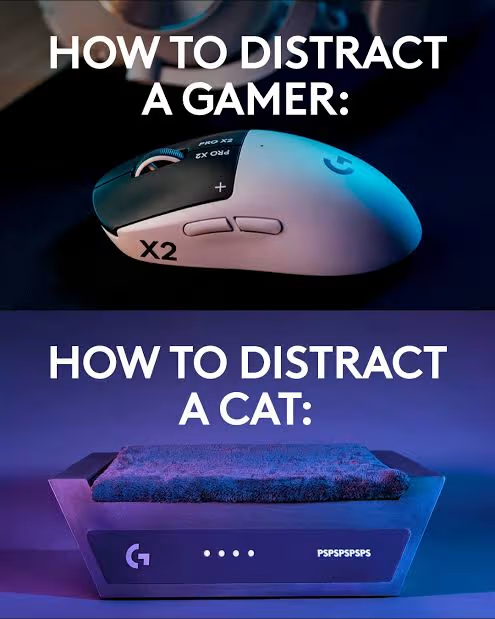
The second was Logitech G LAYSTATION, a “designated recharge station” with proprietary LAYSYNC technology, designed so that cats would lay there instead of on the keyboard. The tagline, “Sorry Mittens, you can’t lay here, Logitech drivers refuse to start again.” The Threads reaction was immediate, because every cat owner alive knows that Mittens will still choose the keyboard.
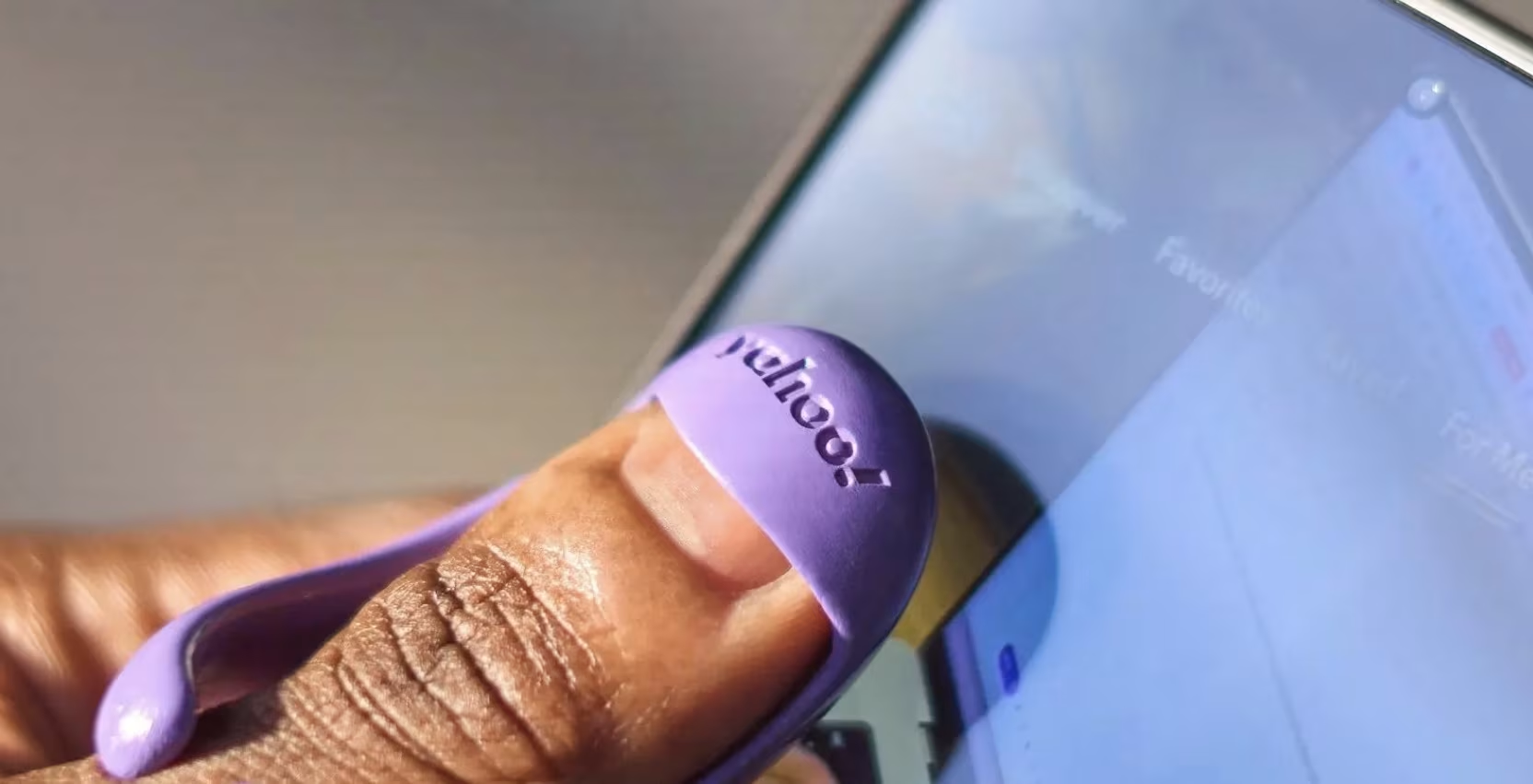
Yahoo launched The Scrōll Stoppr, a weighted ring for the thumb, physically designed to make scrolling impossible. They sold it for $4.99 on TikTok Shop, shipped inside a box that played a yodel, and it sold out quickly. The sharper detail is the self-awareness baked into the concept: Yahoo profits directly from the scrolling habit it was pretending to cure. That kind of earned irony is what separates a clever stunt from a forgettable one.
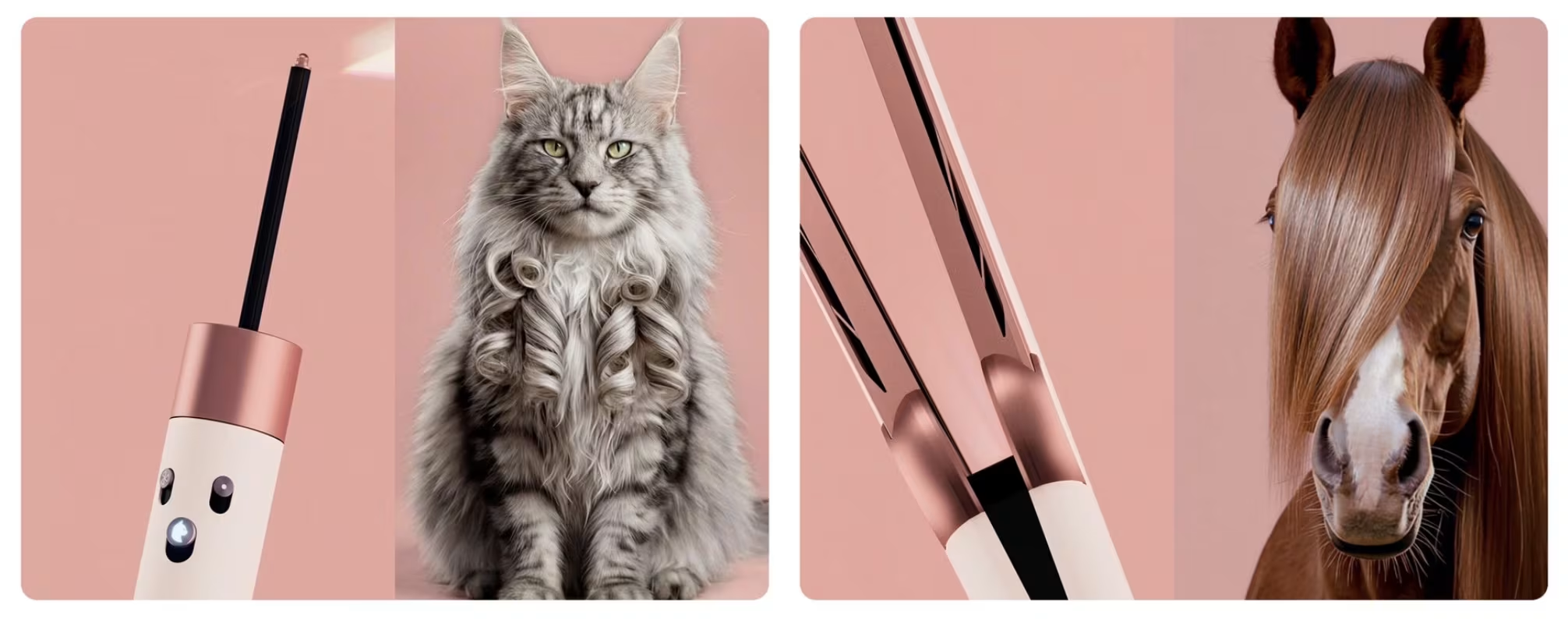
Rather than posting a single joke on the day, Dyson ran a full week of teaser content around a mysterious “luscious hair” launch. The eventual reveal was the Dyson Beauty Pet Range: a premium styling line designed exclusively for pets. The campaign combined two of social media’s most reliable engagement drivers (premium tech aesthetics and animals) into one concept, and the teaser format meant audiences had already invested in the reveal before they knew what it was. Patient, precise, and very well executed.
Best Marketing Campaigns 2026
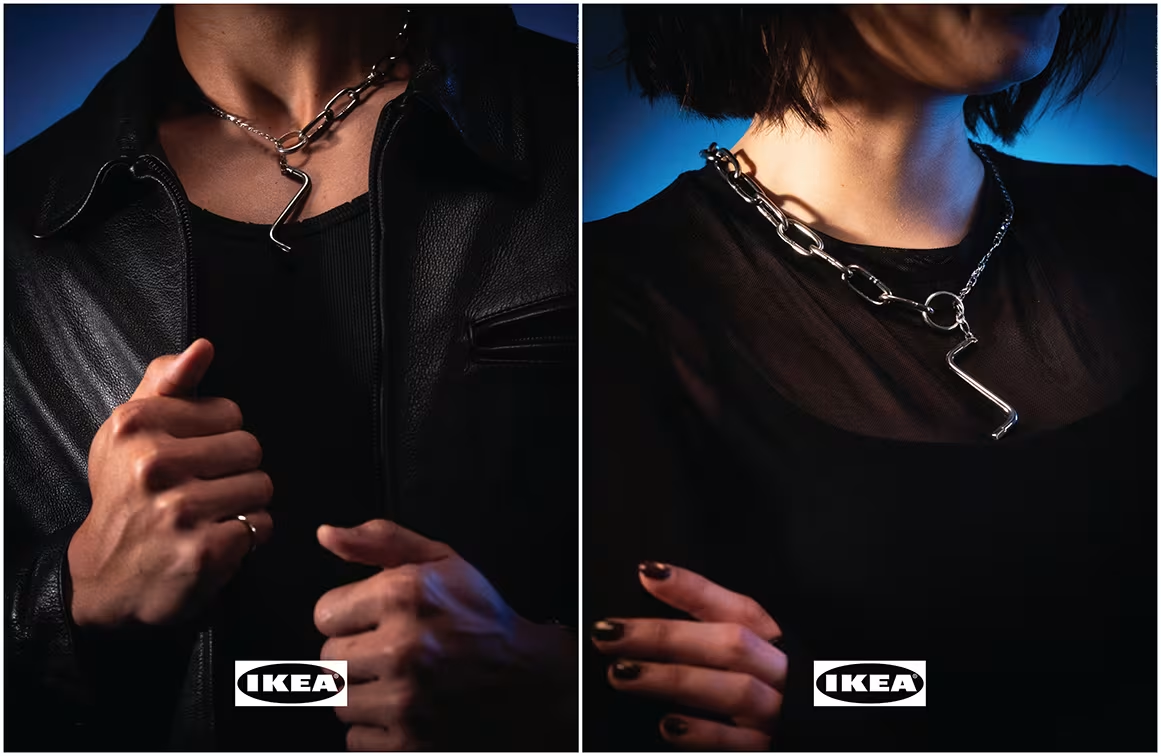
IKEA Singapore transformed the humble Allen key (the hexagonal wrench tucked into every flat-pack purchase) into a line of wearable jewellery. The concept is perfectly on-brand: it takes something every IKEA customer recognises, reframes it as a luxury object, and lets the audience debate whether they would genuinely wear it. Many commenters said they would. When that happens, a brand has not just pulled off a prank. It has accidentally run a product validation exercise at zero cost.
Malta-based digital creative agency MPiFY built its campaign around a real news story. Just days before 1 April, Nestlé confirmed that 12 tons of KitKat bars had been stolen while in transit from a factory in central Italy to Poland. MPiFY issued an official statement of sincere concern regarding the recent event, closing with the line, “On a completely unrelated note, our team seems unusually productive today.” A final slide featured MPiFY’s gorilla mascot, Mr. Silverback, got caught in the dark while munching KitKats.
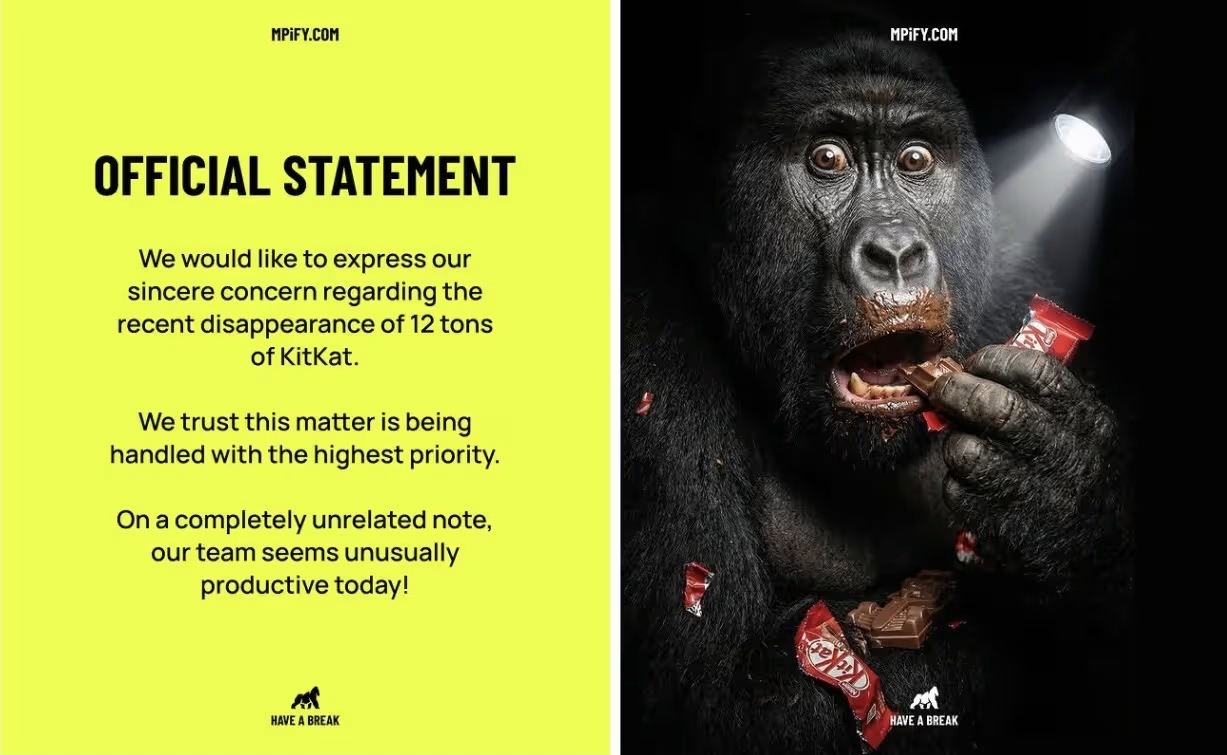
This is textbook newsjacking: a real, well-timed cultural moment provides the set-up, and a confident brand voice provides the punchline. The formal statement format gives the joke enough structural credibility to earn the reveal. It is exactly the kind of culturally attuned, brand-consistent creative work that defines MPiFY’s approach to digital marketing.
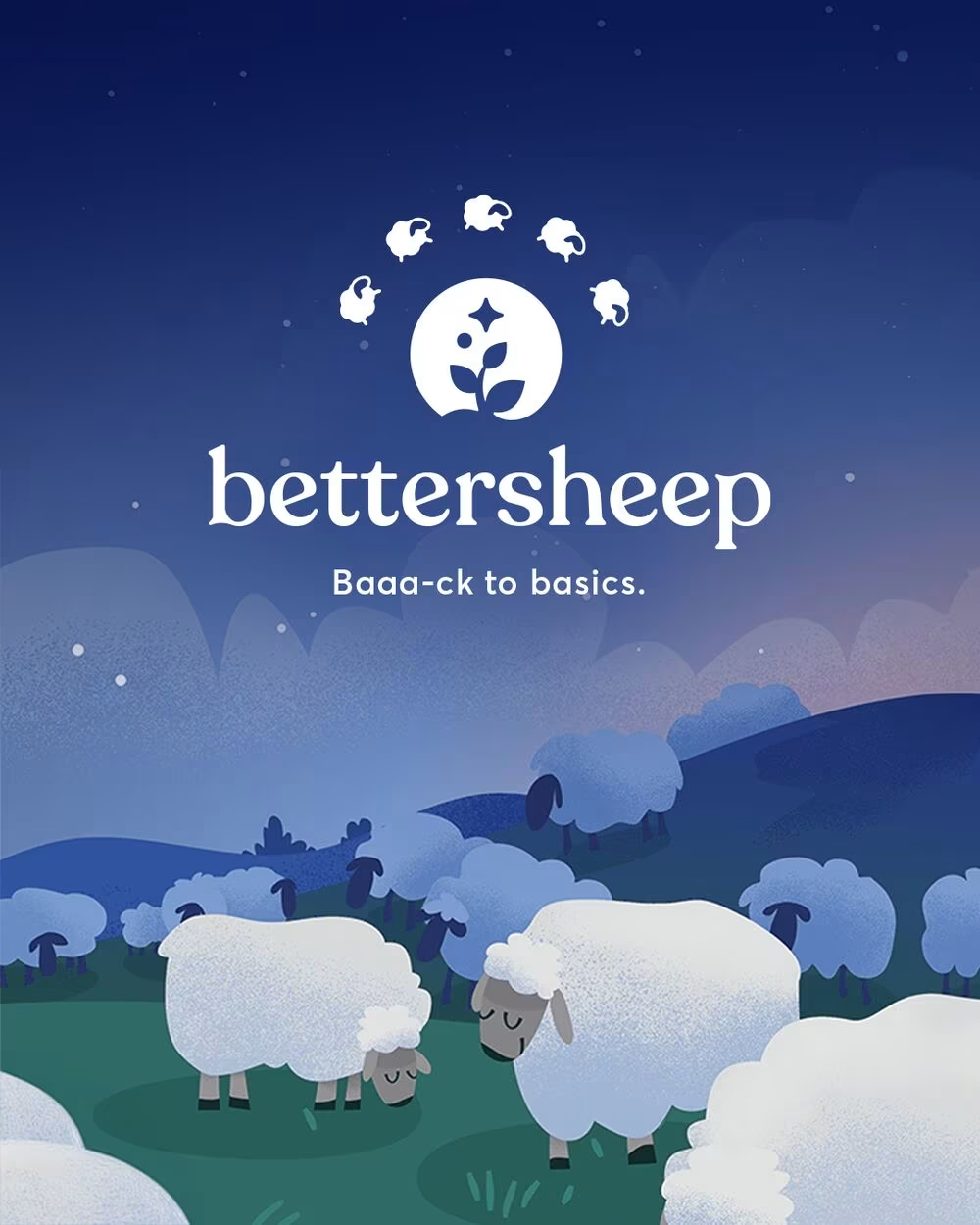
BetterSleep rebranded as “BetterSheep” for an entire day, complete with sheep soundscapes, a counting-sheep meditation, a dedicated landing page, and a one-month free subscription offer for anyone who signed up. The joke was also the product, and the product was the campaign. Rather than a single social post, BetterSleep built a full content ecosystem around the gag, which is precisely why it worked. When the prank has its own conversion funnel, it stops being a stunt and starts being a marketing asset.
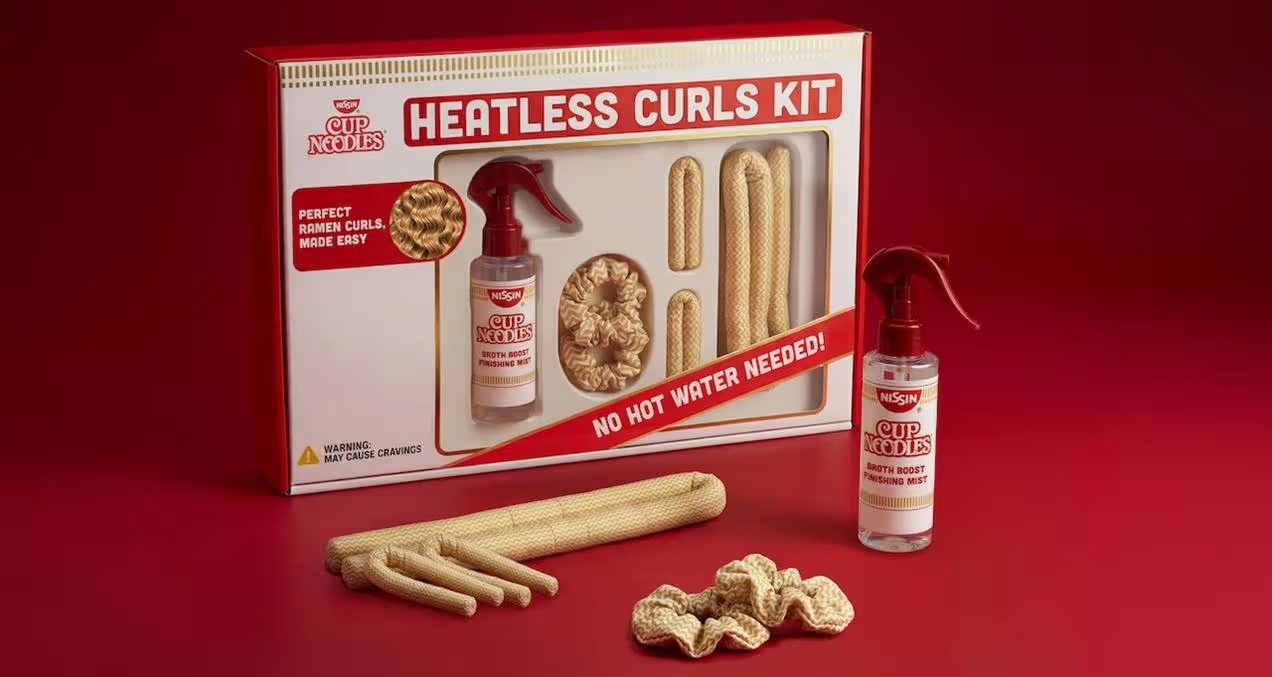
Nissin Cup Noodles announced a heatless hair curler kit with noodle-coloured rods and a “Broth Boost Finishing Mist” setting spray. Absurd by design, but the timing was precise. Heatless styling was already trending, which gave the concept just enough plausibility to send comment sections into a frenzy of people asking where to buy it. Trend-awareness is half the battle in any April Fool’s campaign, and Nissin clearly did its homework.
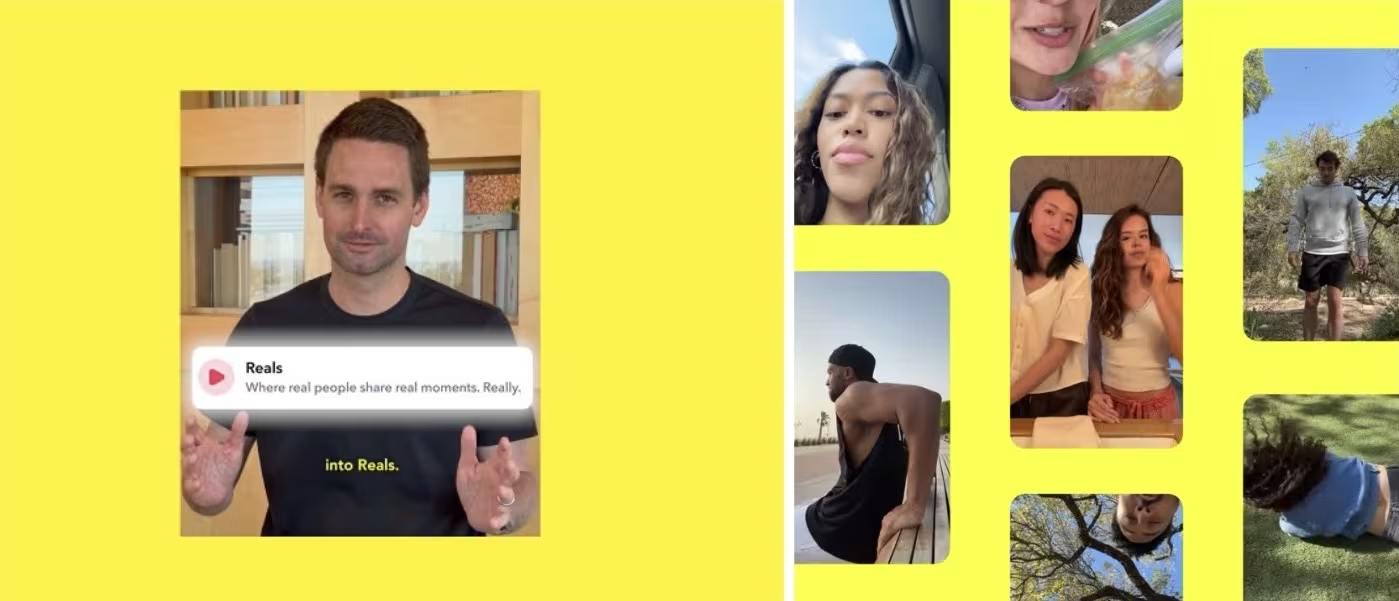
Snapchat’s “Spotlight” temporarily rebranded as “Reals”, mimicking the visual format and copywriting tone of Instagram Reels, with the tagline, “Real people. Real moments. Really.” For anyone who knows that Snapchat invented the Stories format that Instagram subsequently replicated and scaled across a far larger user base, the dig required no explanation. For anyone who did not know the history, it still read as a clean, slightly strange rebrand. Petty in the best possible sense, and precisely targeted.
While other brands were simulating launches, Dunkin’ offered something entirely real. The “STILLNOTAJOKE” promo code in its mobile app unlocked over one million free coffees for customers. On a day when no one trusts anything, the most disruptive move is to be genuinely trustworthy. Dunkin’ weaponised the collective scepticism of April Fool’s and turned it into a loyalty mechanic. The strategic logic is simple and it is worth writing down somewhere.
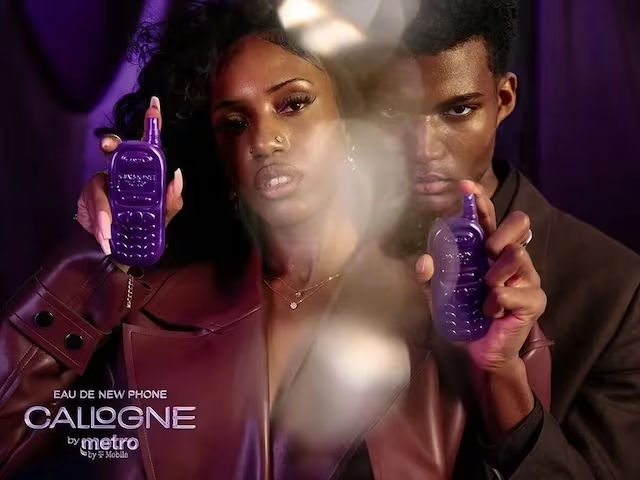
Metro by T-Mobile declared itself the inventor of the world’s first luxury fragrance inspired by the scent of a brand new mobile phone, CALLoGNE (yes, a wordplay on “cologne”). The campaign shipped magenta handset-shaped bottles to tech influencers. The bottles were real. The cologne inside was not. It is a clean concept that plays very naturally in unboxing content and earned genuine influencer coverage without requiring a large production budget. A good physical prop often does more for earned reach than a polished CGI render.
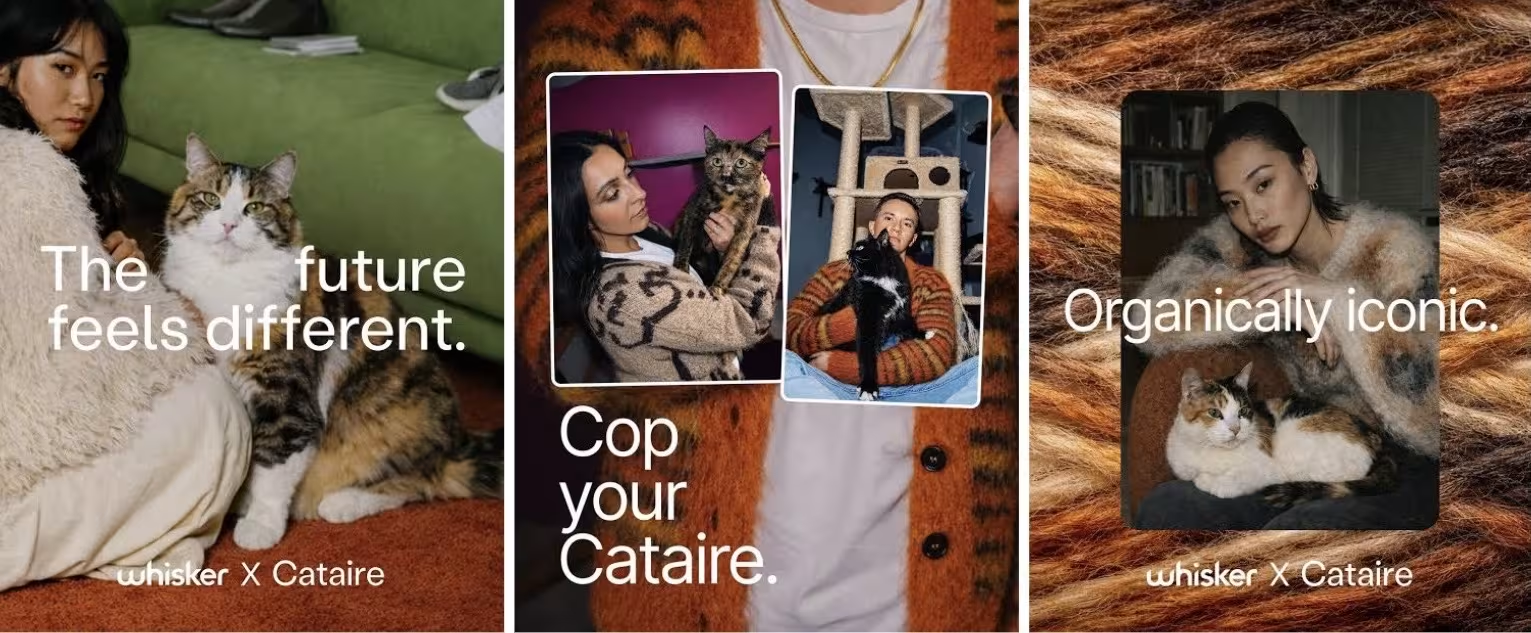
Whisker, the company behind the Litter-Robot, launched Cataire: an organic sweater line featuring real cat hair harvested from adoptable rescue cats. The name is a play on “cat hair”, which every cat owner already finds on every item of clothing they own. The campaign reframes an unavoidable nuisance as a premium feature, which is classic rebranding logic applied in a joke context. The rescue cat angle adds a layer of genuine warmth and purpose, which is the best possible use of a fashion prank.
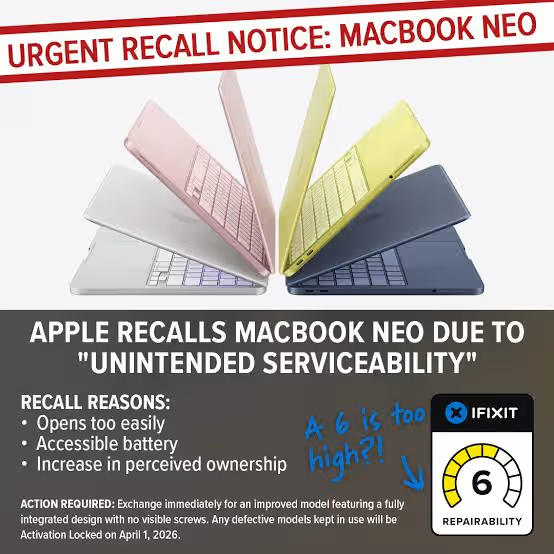
iFixit issued an emergency recall for the fictional Apple MacBook Neo, citing a critical design flaw: the device was too easy to repair. Its battery was attached with magnets rather than industrial adhesive, and this had been classified as a “security risk.” iFixit campaigns year-round on the right to repair. Apple products are notoriously difficult to open, maintain, or service without consequences. This prank was not really a joke. It was a press release dressed in a costume, and it made its argument more effectively than most conventional advocacy pieces.
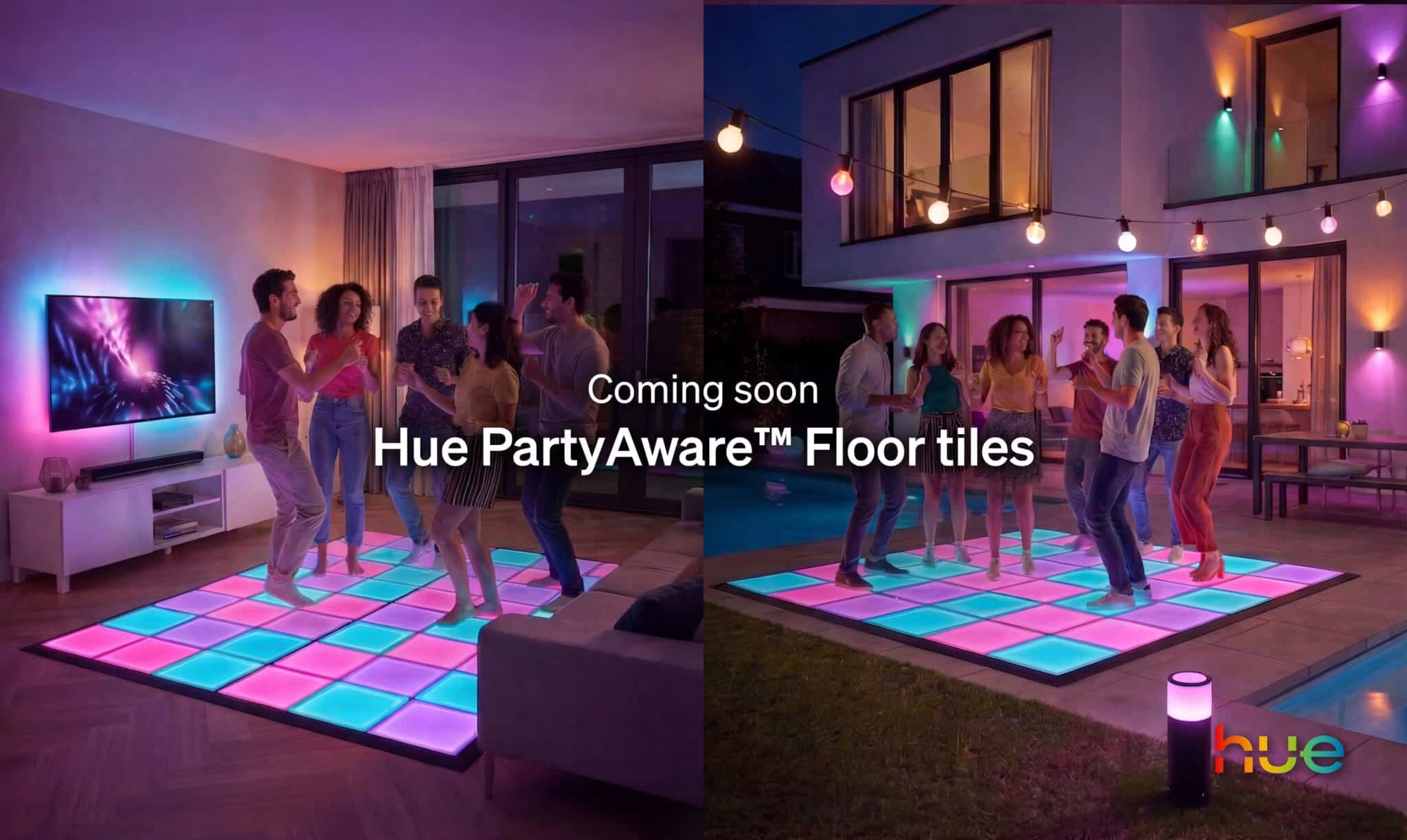
Philips Hue teased modular LED floor tiles called Hue PartyAware Floor, designed to react to music and footsteps. The internet responded with variations of “take our money immediately.” Philips Hue confirmed it was a joke. The internet continued not caring. What Philips Hue accidentally ran was a zero-budget, global product concept test, with thousands of people voluntarily signalling genuine purchase intent for a product that does not yet exist. This says something important about the relationship between fake product launches and real product development.
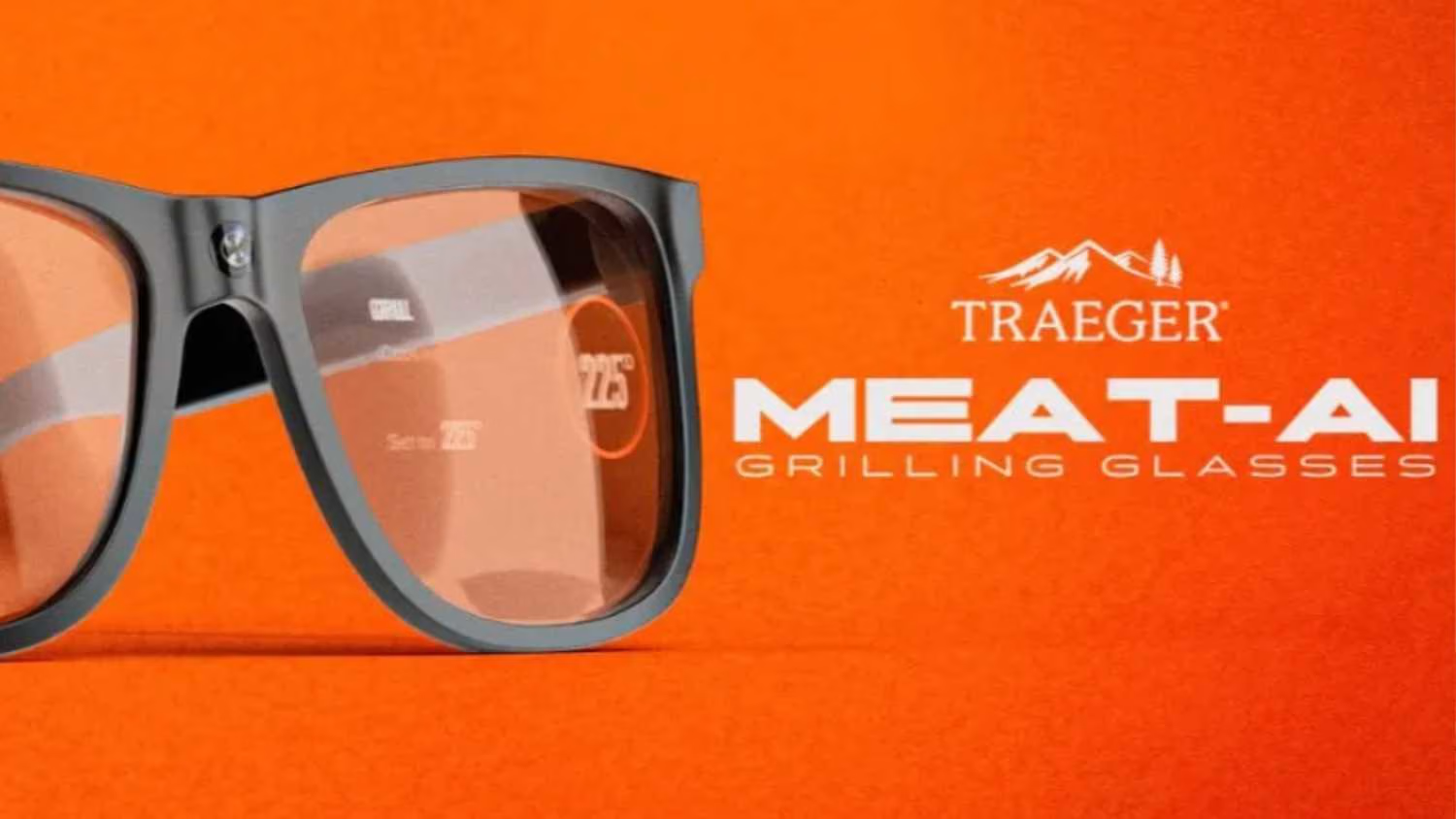
Traeger announced MEAT-AI, an AI-powered smart eyewear with thermal imaging, night-vision grilling capability, and hands-free content capture. The concept is convincing enough to generate coverage, but perhaps slightly less funny than intended: Traeger already sells app-connected grills with AI-assisted temperature probes and cook recommendations. When your fake product is only one product cycle away from your actual roadmap, the joke loses its edge. A useful reminder that April Fol’s parody works best when there is genuine distance between the spoof and the shelf.
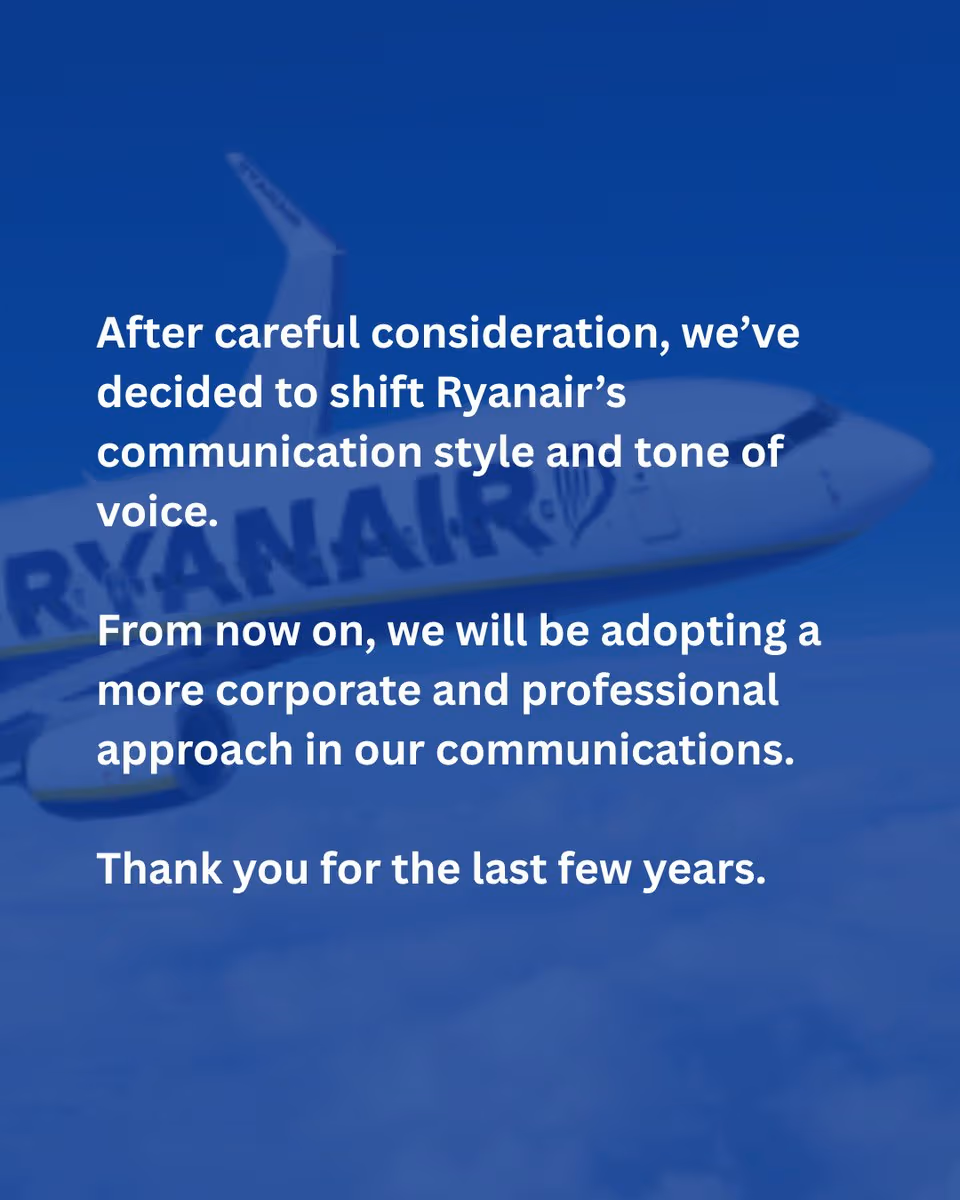
Ryanair announced it was abandoning its famously chaotic social media identity in favour of a “more corporate and professional communication style.” The critical detail: the announcement was posted on the evening of 31 March, before anyone’s April Fool’s radar was active. For a brand whose entire persona is built on irreverence and provocation, the pivot was credible enough to genuinely confuse thousands of followers before they caught on. Ryanair did not borrow a joke format. They inverted their own brand identity and made the inversion the punchline.
The dominant format of April Fool’s 2026 was the fully developed fake product launch: a name, a price point, a visual identity, a landing page, and in many cases, a real promotional offer attached. With creator marketing spend projected to reach $44 billion in the US alone in 2026, an 18% increase on the prior year, the value of genuinely shareable content has never been higher.
The campaigns that worked this year did not just generate laughs. Through a strong creative process, strategic positioning, and clear visual communication, those successful campaigns generated leads, product insights, earned media, and in several cases, a waiting list for something that does not exist yet. Several campaigns also reflected broader branding and design trends currently shaping digital marketing.
Learning from those, the team at MPiFY approaches every campaign with impactful creativity. Whether the brief is a product launch, a brand refresh, or a single well-timed social post. If you are building a brand that wants to be part of the conversation rather than just near it, get in touch with MPiFY and let us talk about what that looks like in practice.
According to Hootsuite’s 2024 Social Trends Report (via Ignite Social Media), humorous content generates 23% higher engagement rates than standard brand messaging. Separately, 68% of consumers actively appreciate brands that show humour and personality on social media. April Fool’s is not marketing’s day off. It is one of its most efficient testing grounds, a single day when audiences arrive already expecting something unexpected.
No. April Fool’s works for brands whose tone allows for playfulness, self-awareness, or cultural commentary. A brand built primarily on authority and reliability may communicate more effectively by simply not participating. Forced humour is significantly worse than no humour.
Newsjacking is the practice of inserting a brand into a breaking or trending news story with a relevant, well-timed angle. MPiFY’s “KitKat” campaign is a clean example: a real news event provided the set-up, and a confident brand voice delivered the punchline.
Yes. BetterSleep’s “BetterSheep” rebrand and Dunkin’s “STILLNOTAJOKE” promo code both demonstrate that a well-constructed April Fool’s campaign can drive real signups, app downloads, and conversions alongside organic social engagement.
Precision consistently beats budget on this particular day. Timekettle’s translator concept required no production infrastructure. IKEA Singapore’s ALLËNKI was essentially a photograph of a key on a chain. The best April Fool’s ideas are sharp and specific, not expensive.


.svg)
