
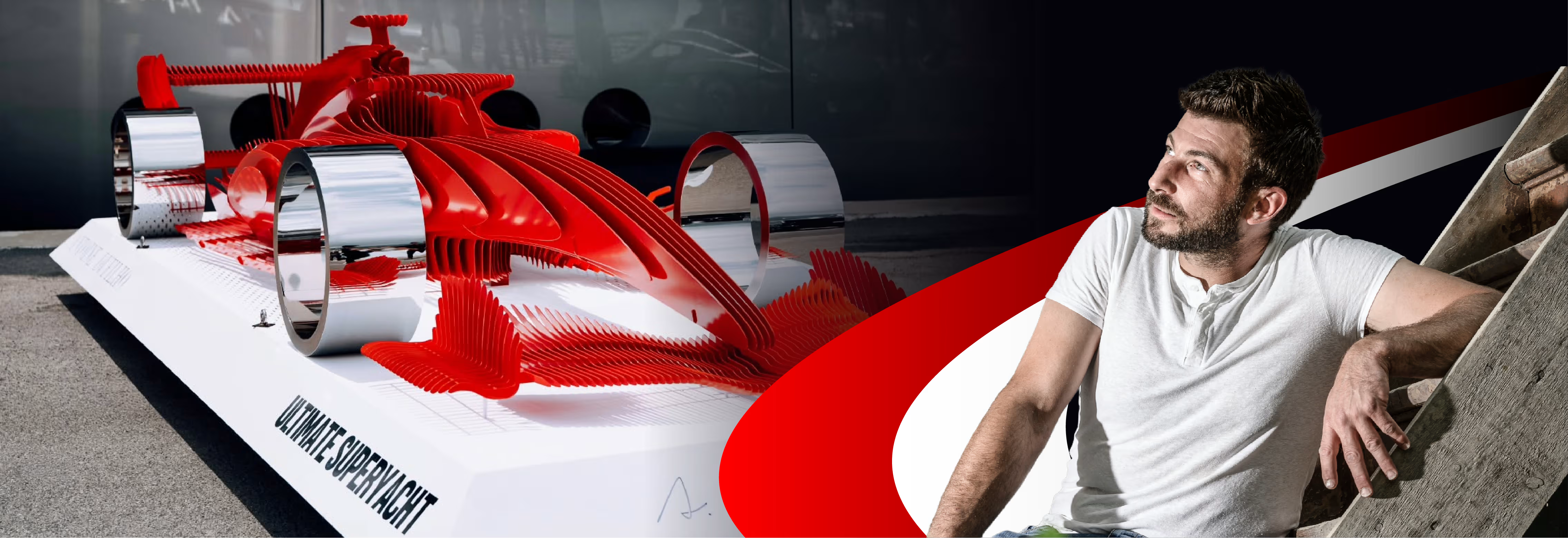
At this year’s Formula 1 Louis Vuitton Grand Prix de Monaco, the loudest design statement on the water did not come from an engine. It came from an automotive sulpture artist, Antoine Dufilho, whose full scale aluminium Formula One piece turned a superyacht’s bow into the most photographed corner of the harbour
Table of Contents:
Antoine Dufilho is the French sculptor behind the Formula One artwork that dominated Monaco Grand Prix week in 2026. He has been developing his signature metalwork full time since 2012. A graduate of Lille School of Architecture and Landscape, he was able to design and build himself the studio in which all his works are created in the Lille countryside, using maritime containers.
.avif)
Today, his catalogue already runs from through Ferrari, Porsche, Bugatti and McLaren bodies reimagined in metal. You can follow his current work on Instagram, where the Monaco piece has been doing most of the talking lately.
“Seeing the Formula One sculpture surrounded by the atmosphere of Monaco—the noise, the energy, the racing cars and the Mediterranean light—made me realise that it was exactly where it needed to be. It created a moment of stillness within an environment entirely dedicated to speed.”
— Antoine Dufilho
An automotive sculptor is an artist who treats a car not as a shape to copy, but as a structure to take apart and rebuild. In MPiFY’s interview with Dufilho, he explained that he does not simply reproduce the exterior of a car. He studies its underlying construction the way an architect reads the skeleton of a building, then deconstructs the form and rebuilds it through a succession of metal elements, so the sculpture stays recognisable while revealing something normally invisible: its structure, its movement and its tension.
The sculpture, simply titled Formula One, was installed on the bow of the superyacht Stella Maris in Port Hercule for the entire Grand Prix weekend, built entirely from aluminium at the full dimensions of a real F1 monopost. Dufilho told MPiFY the original ambition was to capture the sensation of a Formula One car moving at full speed and then freeze that energy into physical form, so that from a distance people would recognise the silhouette instantly, while moving closer would reveal the layers and voids underneath. The setting did the rest of the work. Stella Maris is a 236 foot, 72 metre yacht built in 2015, chartering for around $755,500 a week at peak season, and it shared the deck with an Audi F1 show car and a Koenigsegg Jesko. The whole display was part of Tom Claeren’s Ultimate Superyacht Experience, now in its fourth consecutive year at the Monaco Grand Prix.
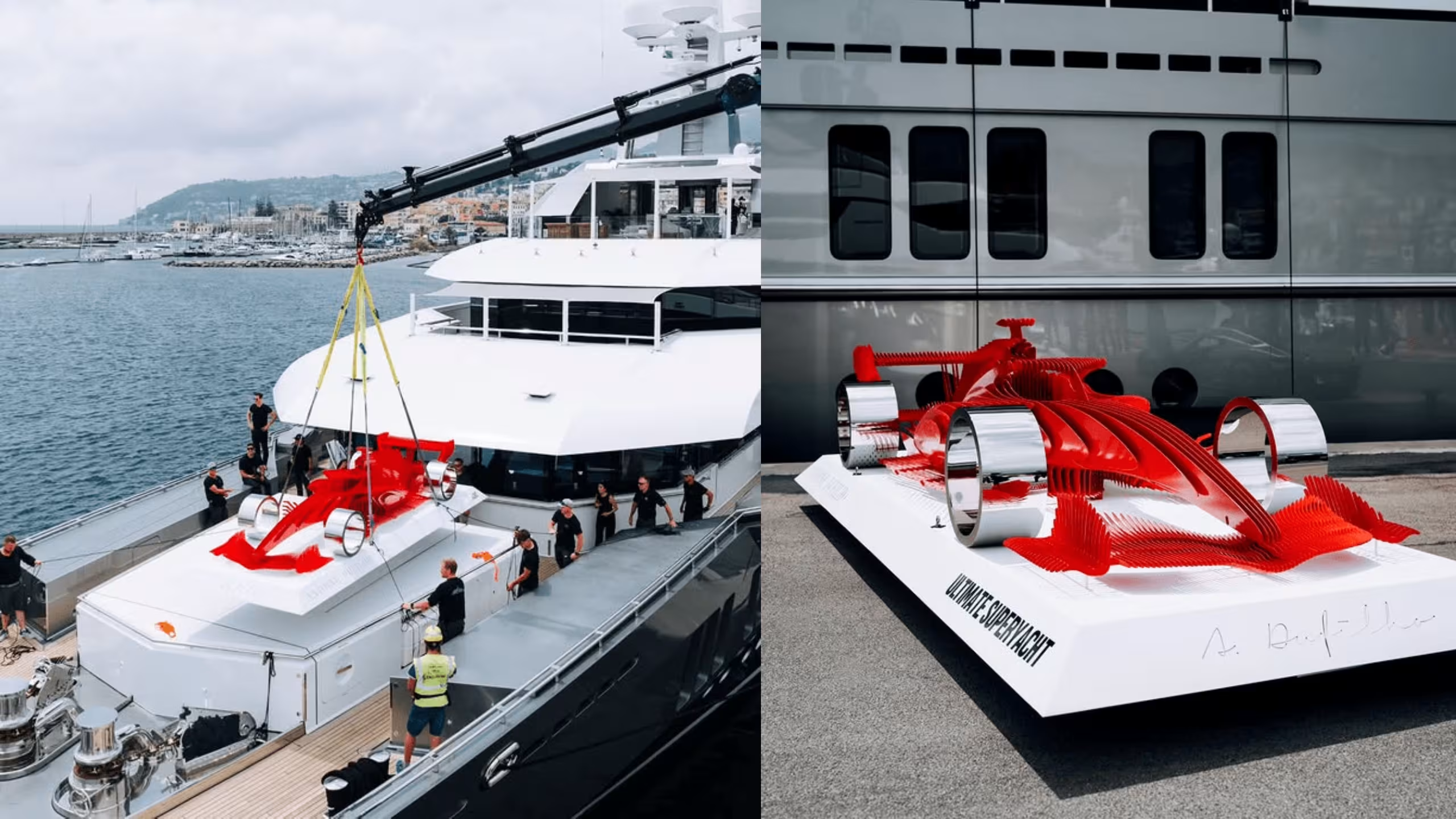
MPiFY asked Dufilho where the real difficulty lay in turning a Formula One car into a piece of still metal, and his answer centred on legibility. Dufilho highlighted that a Formula One car’s shape is dictated by hundreds of aerodynamic details, so including everything would make the sculpture too literal, while removing too much would strip away its identity altogether. Movement comes instead from the rhythm of the metal sections and the gaps between them, with the car appearing almost complete from one angle and dissolving into fragments from another.
At Monaco GP, Dufilho noticed visitors did not simply photograph the piece once and walk away; they circled it instinctively, trying to work out how the form changed from each new viewpoint. “My sculptures are not designed to be understood from a single image. They require movement from the viewer in order to reveal their own movement,” Dufilho said.
Architecture taught Dufilho to read a car’s hidden structure before he ever started rebuilding it in metal. He told MPiFY that his love of structure comes directly from architecture, and that thinking in terms of rhythm, proportion, balance and the relationship between solids and voids shapes every piece he makes, automotive or otherwise. MPiFY’s Co-Founder and Creative Director, Justin Ciappara says the line from the interview that stayed with him most was Dufilho’s idea that voids are not empty space but part of the design itself, and that the same principle applies to brand work, since what a creative team chooses to leave out usually says as much as what it puts in.
.avif)
Dufilho is not slowing down after Monaco. He is developing a more compact series inspired by the monumental Formula One piece, so the same concept can exist at a more intimate scale, alongside new monumental projects where sculpture interacts directly with architecture and public spaces. He also hinted at conversations underway in automotive, aviation and engineering, though he kept the details close for now. The Automobile Club de Monaco extended its Formula 1 race contract to 2035 in September 2025, with the Grand Prix moving permanently to the first weekend of June from 2026, so it is safe to assume the harbour will keep needing showstopping art for years to come.
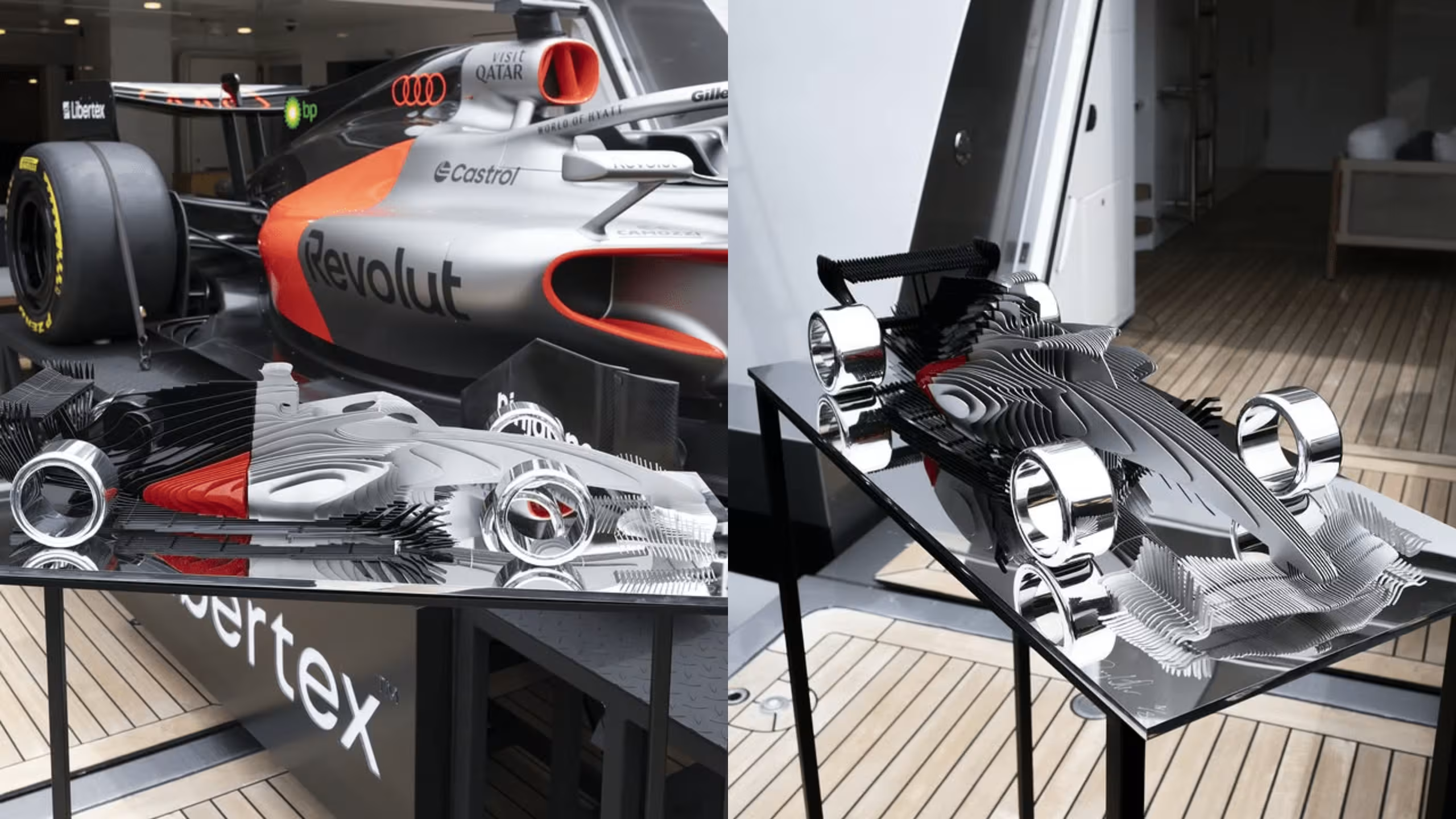
Looking further ahead, Dufilho stated that he wants his work to be recognised beyond the world of automotive art.
“Cars were the starting point because they combine design, engineering, emotion and movement in an extraordinary way. However, the real subject of my work is not the automobile itself. It is movement, structure and the perception of form.”
— Antoine Dufilho
The ultimate goal is a universal sculptural language flexible enough to move between automotive forms, architecture, aviation and public installations, turning each new piece into a landmark that belongs to its location rather than simply decorating it.
“I would like people to recognise an Antoine Dufilho sculpture before they even recognise the object that inspired it,” he added.
MPiFY’s approach starts with finding the one cultural moment your brand can credibly attach itself to, the same way Dufilho’s sculpture attached itself to Monaco Grand Prix week rather than competing with it. That means pairing a strong creative design with the kind of structured, source backed storytelling that search tools and AI engines can actually pick up and cite. If your brand has a Monaco moment waiting to happen, MPiFY can help you build the creative and the visibility strategy around it. Reach out to MPiFY today.
Antoine Dufilho is a French sculptor who has been turning cars into kinetic metal artworks full time since 2012.
It was a full scale kinetic piece built entirely from aluminium.
It was installed on the bow of the superyacht Stella Maris in Port Hercule.
Dufilho found the biggest challenge was balancing legibility and abstraction so the car stayed recognisable without becoming a literal copy.
Dufilho’s structural, story-led approach to sculpture reflects the same thinking MPiFY applies to creative brand design.
No, his sculptural language already covers Ferraris, Porsches and architecture, with aviation projects reportedly in development.
It taught him to read a car’s hidden structure and rebuild it through deliberate solids and voids.
He wants a universal sculptural language that lets people recognise his work before the object that inspired it, turning future pieces into lasting landmarks.
Yes, MPiFY helps brands engineer similar visibility through strategic creative and AI friendly content.


.svg)
