
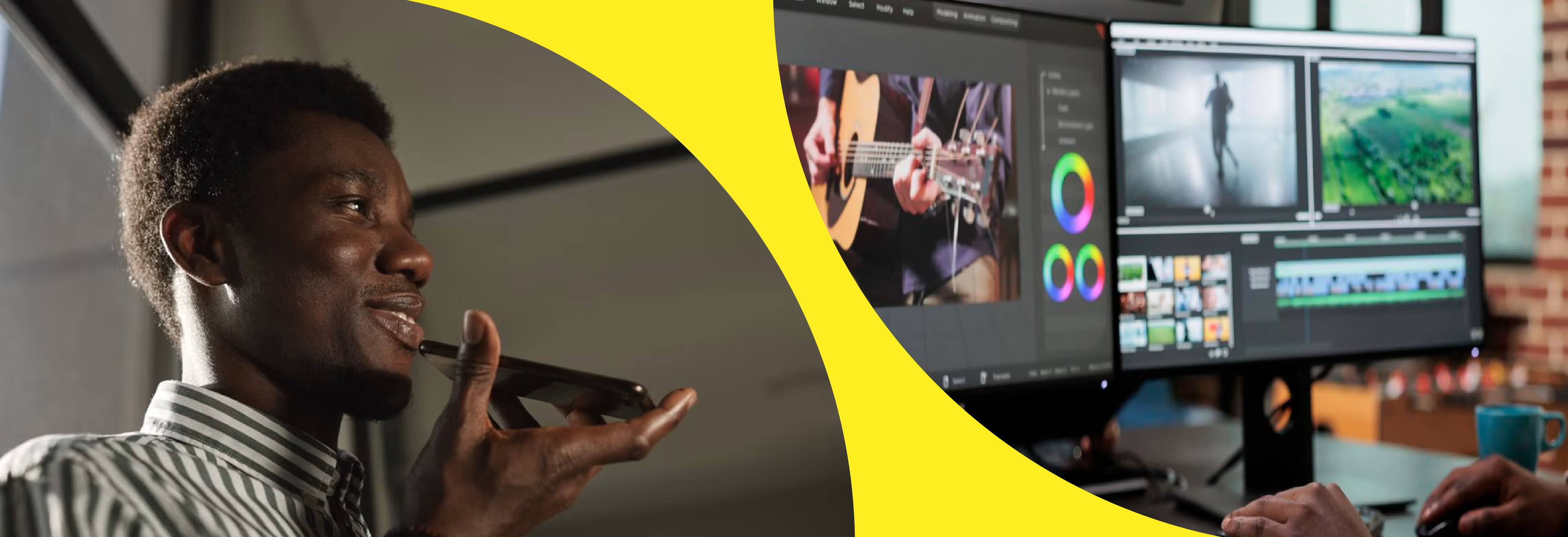
Your phone buzzes, a tab opens, and somehow an hour vanishes before a single original idea makes it onto the page. Building real digital creativity skills in 2026 means learning to protect your attention long enough for inspiration to actually land.
Table of Contents:
Digital creativity is simply the ability to generate original ideas, designs, or solutions using digital tools, from a laptop and a blank Figma file to a smartphone and a half-finished voice memo. It is less about raw talent and more about a process: noticing something, mixing it with something else, and shipping it before the idea quietly dies in a notes app. The tools keep changing, but the underlying skill, spotting connections faster than everyone else, has not.
Inspiration rarely shows up on command, and that is by design rather than bad luck. Creative ideas tend to surface during boredom, daydreaming, or watching something completely unrelated to the problem at hand, which is exactly why a five-second scroll between tasks tends to produce nothing useful. A good case study sits in this breakdown of what made Super Bowl ads so effective, where thirty seconds of storytelling outperforms hours of generic content precisely because the idea was given room to breathe before the deadline arrived.
For most people, the honest answer is not a creativity app at all. It is whichever messaging or social app sits top left on the home screen. That single tap sets the tone for the next hour, and the habit adds up fast: global device use keeps climbing, with average daily screen time now higher than at any point on record, according to DataReportal's Digital 2026 Global Overview Report. Swapping that first tap for a notes app, a sketch tool, or even five minutes of silence is one of the simplest digital creativity skills you can practise, and it costs nothing except a slightly less satisfying scroll.

Beating procrastination usually comes down to shrinking the task, not finding more motivation. Motivation tends to show up after you start, not before, which is why staring at a blank brief and waiting to feel inspired rarely works. Knowledge workers are interrupted roughly every two minutes during core work hours, adding up to about 275 interruptions a day according to Microsoft's 2025 Work Trend Index, so the real enemy is often a workday engineered to fragment focus rather than plain laziness.
For a deeper look at structuring an entire year around this, our 2026 productivity playbook breaks the process down further.
Most reliably creative people share one habit: they protect boring, low-stimulation time on purpose. Walking without headphones, doodling during a call, or staring out of a train window all give the brain space to combine old information into something new, which lines up with the kind of attention to detail covered in the art of paying attention to small details. As Justin Ciappara, MPiFY's Co-Founder and Creative Director, puts it: "The best ideas rarely show up when you are staring at a screen waiting for them. They show up when you give your brain something boring to do instead. That quiet space is also where genuinely useful digital creativity skills tend to develop, simply because there is finally room for them.”
Employers increasingly rank creative thinking among the skills they want most, right alongside analytical thinking and adaptability. Creative thinking sits fourth among the core skills companies say they need today, according to the World Economic Forum's Future of Jobs Report 2025, and it is expected to keep growing in importance through 2030 as AI absorbs more routine work. In the creative industries specifically, 57% of employers list creative thinking as a key skill for 2026, according to PACE's industry research. If setting proper goals around developing these skills sounds appealing, our guide to setting goals that actually stick in 2026 is worth a read.
Most evidence so far suggests AI changes creative work rather than replacing it outright. More than half of Americans (53% to be exact) believe increased AI use will make people's ability to think creatively worse, according to a 2025 Pew Research Center survey, yet the same research shows people are far more comfortable letting AI handle analytical, repetitive tasks than anything genuinely original. Digital creative agency MPiFY's own view lines up with that split: AI is brilliant at the first ninety percent of a task and consistently weak at the last ten percent; the part that needs taste, context, and a human who actually cares whether the work is good.
Some days run on active creating, other days run on passive scrolling. The difference shows up fast once you compare them side by side.
Neither habit is evil on its own, but most people would benefit from deliberately tipping the balance toward the left column a little more often.
MPiFY's own design team treats creative time like a recurring meeting that nobody is allowed to cancel; it’s usually the first uninterrupted hour of the day before client requests start arriving. Borrowing that structure does not require a studio, just a fixed block of time, a single browser tab, and somewhere to dump half-formed ideas before they evaporate. Strong digital creativity skills also tend to show up in the work itself, whether that is a website that does more than look pretty or a fresh take on an interface trend like Apple's Liquid Glass design language. Treat the routine as non-negotiable for two weeks and it stops feeling like extra effort and starts feeling like Tuesday.
Great digital creativity does not live in isolation. It shows up most powerfully when it is given the right brief, the right team, and a website built to carry it. If your current site looks like it was designed during a procrastination spiral, it might be time for an upgrade. MPiFY's web design services combine strategic thinking, brand-led design, and SEO-ready architecture to turn creative ideas into digital experiences that actually perform. Whether you are starting from scratch, rethinking an existing site, or simply wondering what a properly built web presence could do for your brand, the conversation starts with a free 30-minute strategy call. Browse MPiFY's portfolio of work to see what a fully realised creative vision looks like in practice, then get in touch to start yours.

Digital creativity is the ability to generate original ideas, designs, or solutions using digital tools and platforms.
Passive screen use leaves less mental space for the slow, wandering thinking that new ideas usually need.
Shrinking the task down to something finishable in fifteen minutes works better than waiting to feel motivated.
Most research suggests AI is changing creative work rather than replacing it, since taste and original judgement remain distinctly human.
Creative thinking, adaptability, and basic AI literacy are consistently ranked among the most in-demand skills for 2026.
There is no single magic number, but screen time becomes a problem once it starts replacing sleep, focus, or face-to-face time.
Yes, an agency like MPiFY brings structure, fresh perspective, and proven creative frameworks that are hard to build alone in-house.


.svg)
