

Everyone loves a bold new logo, but a real brand strategy is the messy, unglamorous work that decides whether that logo means anything six months later. This piece pulls together honest, widely discussed branding knowledge alongside 2026 research, to show what actually makes brand strategy work in practice.
Table of Contents:
Brand strategy defines what a business stands for, who it serves, how it is positioned, and how that promise is communicated consistently over time. A logo and colour palette are only the visible part of that system.
The counter to the usual branding conversation is simple. Identity is what people can see, while the actual brand is the trust, reputation, expectations, and promise built around it. None of that lives inside a logo file.
Creativity without consistency rarely builds lasting recognition, no matter how clever the concept looks on day one. This shows up directly in consumer behaviour, not just theory. HubSpot’s 2026 marketing trends research found that 82% of consumers prefer to buy from brands whose values they recognise, which means visible identity only works once it is backed by something consistent enough to recognise in the first place.

Brand strategy defines the direction of a brand, while brand identity turns that strategy into a recognisable visual and verbal system. Both matter from the beginning, even on the smallest project.
A logo is only one part of identity. Brand identity includes the personality, visual language, tone, typography, colour, imagery, and other elements that shape how customers experience the business.
Founders are increasingly treating identity as an early business decision rather than something to revisit after growth. QuickBooks’ 2026 Entrepreneurship Trends report found that developing names, logos, and branding assets is already one of the first tasks aspiring founders plan to tackle, with AI-forward millennial founders in particular treating identity as a day-one job.
The difference matters because visual identity can only do its job when there is a clear strategy underneath it. Without that direction, even excellent design can become decoration without a job to do.
Consistency is one of the most underrated brand strategy skills because recognition is built through repeated exposure, not one-off creative ideas.
People rarely sit around discussing the specific colours or fonts of the cars they drive, yet that identity still works quietly in the background every time one passes on the road. Research on how the brain consolidates memory helps explain why meaningful repetition can make information more memorable.
Real brand strategy therefore spends far more time enforcing that quiet consistency than dreaming up flashy new ideas. It is less glamorous than the big reveal, but considerably more useful once the novelty wears off.
Brand books fail when teams treat them as static design documents instead of practical systems for applying brand strategy.
The problem is not the guidelines themselves. It is the order everyone gets backwards. Strategy is supposed to lead to identity, identity leads to the assets, and the assets fuel content and campaigns as the brand keeps evolving.
Most brand books are built the opposite way, starting with a logo and colour palette before anyone has agreed on the strategy underneath. That becomes particularly difficult when a brand is active across multiple channels.
HubSpot’s 2026 State of Marketing data found that most brands now run five to eight channels simultaneously, with 17% running more than eight. That is a lot of surface area for a static guideline to lose its grip.
Good guidelines should therefore function as a living strategy record. They need to help the people actually using the brand make decisions quickly, consistently, and without opening a 70-page PDF every time they need to write a social caption.
A brand strategy usually keeps changing when positioning, audience, goals, and messaging were never clearly agreed in the first place.
It is usually a strategy problem wearing a design costume. When those fundamentals are not aligned upfront, the visual identity keeps changing endlessly, not because nobody can settle on a look, but because nobody in the business is actually aligned on what the brand is supposed to be.
Fixing that alignment upfront is almost always cheaper than redesigning the identity a second or third time. A good strategy gives creative teams constraints to work with, which sounds restrictive until you realise that a blank page offers infinite options and zero direction.

The hardest part is making clear strategic decisions before there is a visual identity to hide behind.
The real difficulty hits before any of the design work begins. It is being stuck with a vague idea of a brand’s “vibe” and having nothing on paper to test it against, then having to make firm decisions without any useful constraints to react to.
A blank page offers infinite options and zero direction. That is why positioning, audience, messaging, and brand promise need to be clarified before designers are expected to solve everything visually.
This also matters because trust is built through behaviour, not just appearance. According to Edelman’s 2025 Trust Barometer, 80% of people say they trust the brands they personally use, more than they trust government or media. That level of trust is earned through consistent behaviour, not a single clever campaign.
Yes, you can overspend on a rebrand when most of the budget goes into visual changes while the underlying customer experience, positioning, or product remains the same.
Customers do not actually care about logos, colours, fonts, brand guidelines, or packaging on their own. Those elements start to matter when the product or service gives people a reason to look twice.
Spending the entire budget on identity while the customer experience stays untouched is exactly how a rebrand ends up invisible. A successful rebrand should solve a business problem, not simply make the existing brand look newer.
Renderforest’s 2026 design trends report notes that brands are moving towards flexible systems that adapt across platforms rather than relying on rigid, one-off identity resets.

Brand identity design can be harder for designers working on their own brand because knowing every possible direction makes it easier to overthink the decision.
A personal project has no client brief to constrain the options, which can make choosing a direction surprisingly difficult. The fix is simplicity, not cleverness. Nobody expects a freelancer’s own brand to reinvent design history. They need it to be clear, recognisable, and appropriate.
That same discipline, timing a strong move instead of overengineering it, is the instinct behind Norwegian Air’s viral logo swap after losing a football bet, where a strong existing identity gave the brand room to play without losing recognition.
As Justin Ciappara, MPiFY’s Co-Founder and Creative Director puts it, “A real brand strategy starts with positioning, not colour swatches. Decide who the brand is for and what it should never say before choosing a single font. From there, visual choices actually mean something instead of being guesses dressed up as decisions.”
That gives the process a useful starting point. A practical brand strategy should move through five connected decisions:
That same logic extends to voice and language, not just visuals, which is why staying consistent even when generative AI drafts the first version matters just as much as staying consistent with colour. It also explains why human judgement still beats automation whenever a brand’s tone is actually on the line.
A strong brand strategy should also consider how the brand is represented beyond its own website. Search engines and AI systems increasingly use a mixture of websites, articles, reviews, FAQs, and other sources to understand what a business does and how it should be described. That makes clarity and consistency useful for both human audiences and modern search.
Before briefing anyone on a new logo, run through this short list:
MPiFY treats brand strategy as a business decision first and a design exercise second. This philosophy, “The brands that last are the ones brave enough to sound the same on a bad day as they do on a good one,” shapes MPiFY’s branding and visual identity services, which start with positioning workshops long before any logo concept gets sketched.
A strategy only proves itself once it leaves the deck, which is why it feeds directly into brand merchandise and into marketing campaigns as well. Messaging tends to land or fall flat depending on how clearly the identity behind it was defined in the first place. That gap matters more than most businesses expect, given how differently Gen Z and millennial audiences actually behave online.
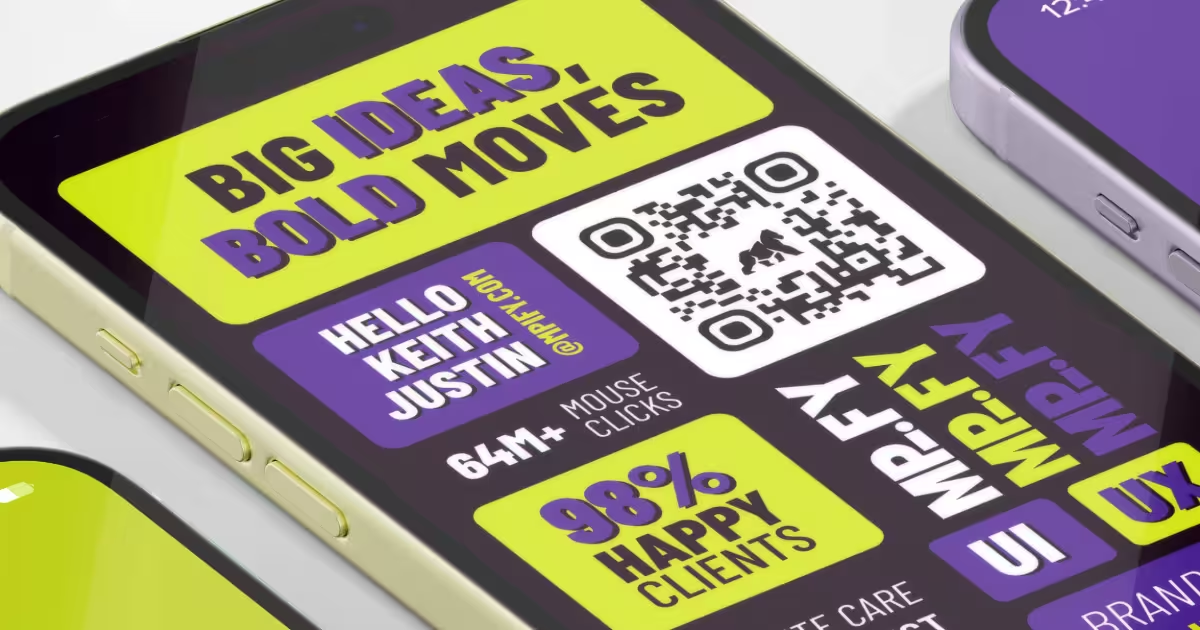
From there, the same strategy needs a home to live in, so the web design work is treated as an extension of the brand rather than a separate deliverable. Every layout choice should reinforce the same personality set out at the strategy stage.
None of that matters if people cannot find the brand in the first place, which is exactly where MPiFY’s SEO and AEO services close the loop. It matters more now than ever, as AI tools increasingly shape how people discover and vet brands before ever visiting a website.
Knowing the perfect strategies, the team at MPiFY approaches every branding project with strategy leading every creative decision. Whether you are building a new brand, refreshing an existing identity, or creating a stronger foundation for future growth, every element is designed to work together. If you are ready to build a brand that people recognise, trust, and remember, let’s get in touch and explore what that could look like for your business.
Brand strategy defines a business’s positioning, audience, promise, messaging, and direction before visual identity is developed.
Brand strategy sets the direction, while brand identity turns that direction into a recognisable visual and verbal system.
Consistency is one of the most underrated skills because recognition grows through repeated, coherent brand experiences.
Brand books fail when they become static design documents instead of practical tools for applying the brand
Yes, especially when most of the budget goes into visuals without addressing positioning, customer experience, or the product itself.
The hardest part is making clear strategic decisions before visual design begins, particularly around positioning, audience, and messaging.
MPiFY treats brand strategy as a business decision first, using positioning to guide identity, messaging, web design, and marketing.


.svg)
