
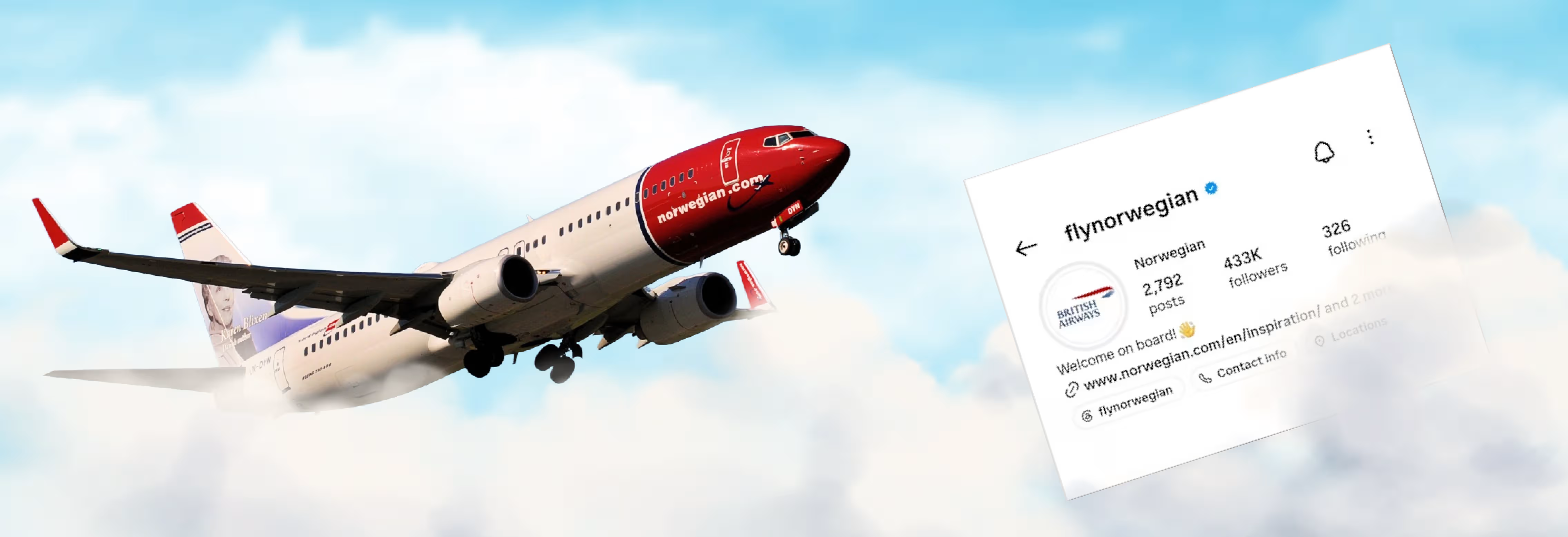
Norway lost the football match, but its national airline just won a masterclass in reactive marketing strategy. When Norwegian bet its Instagram profile picture on a FIFA World Cup result and lost, it turned defeat into one of 2026’s most shared brand moments.
Table of Contents:
Reactive marketing is the practice of turning a live event, trend, or piece of news into an instant, on-brand response instead of waiting for the next quarterly campaign. It sits opposite proactive marketing, which is planned months in advance with time for approvals, A/B testing, and polish. A solid reactive marketing strategy trades that polish for speed, and it only works when a brand already knows its own voice well enough to react without a three-day sign-off chain.
What started as a cheeky Instagram challenge quickly became a masterclass in reactive marketing.
After Norway reached the quarter-finals of 2026 FIFA World Cup, Norwegian Air tagged British Airways with:
“@british_airways, ready to risk your logo?”
Before raising the stakes in the caption:
“Do you wanna make a bet? If Norway wins, you have to switch to our logo on Instagram on Sunday (one day). And vice versa. Deal?”
British Airways fired back with a comment:
“Don’t make bets you can’t win.”
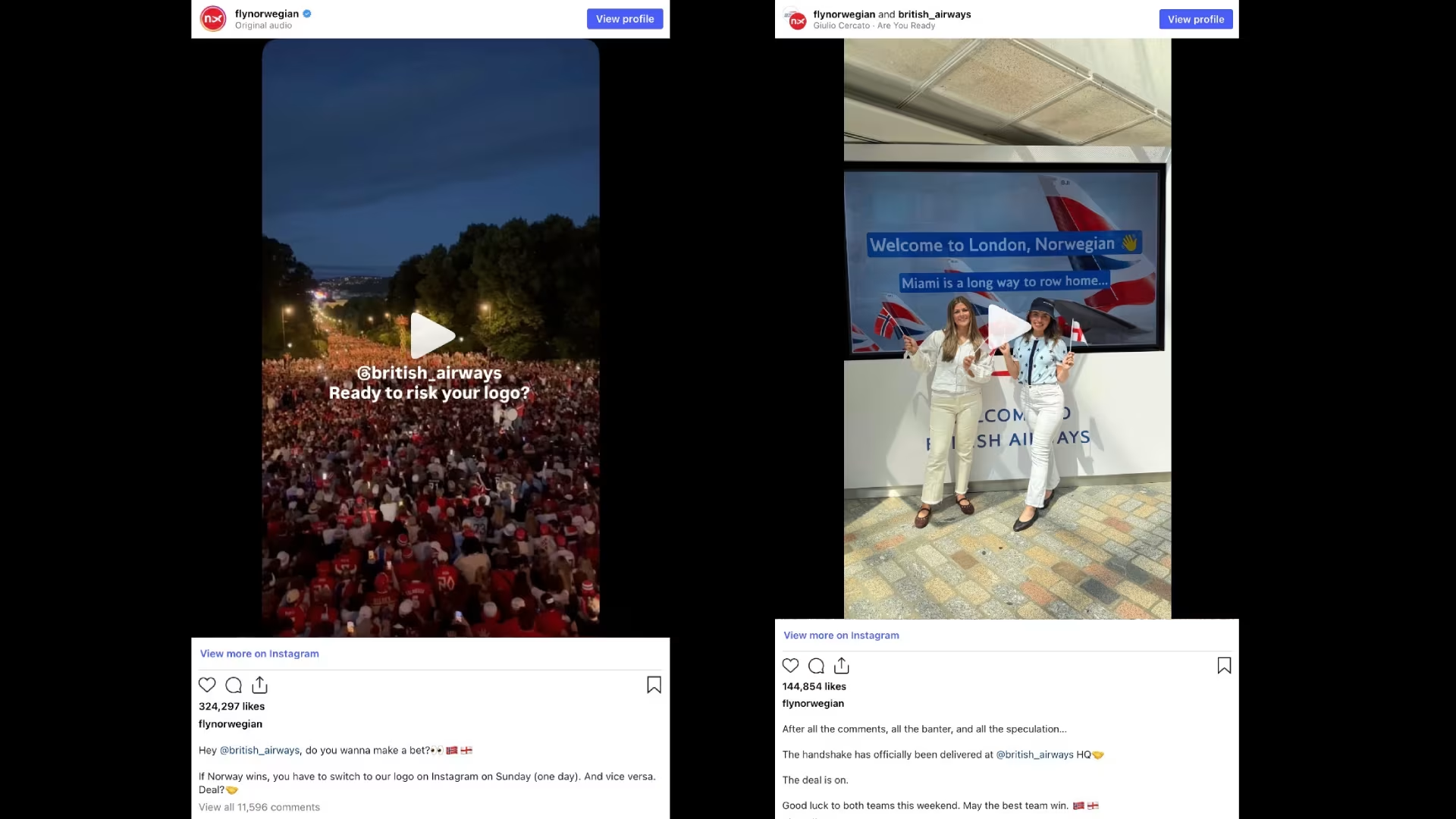
The exchange exploded across social media, pulling in hundreds of thousands of likes and drawing playful replies from brands including Malaysia Airlines (“We’ll be watching with our satay in one hand and signature drink in the other,”), Garuda Indonesia (“We’ll be cheering with an ice-cold Martebe in hand.”), plus Swiss Air, Qatar Airways, Icelandair, Air India, Skyscanner, and Flightradar24.
As match day approached, British Airways kept the momentum going:
“It’s coming home”
Also:
“Got our logo ready?”
While Norwegian Air confidently replied:
“Ready… hovering over the delete button.”
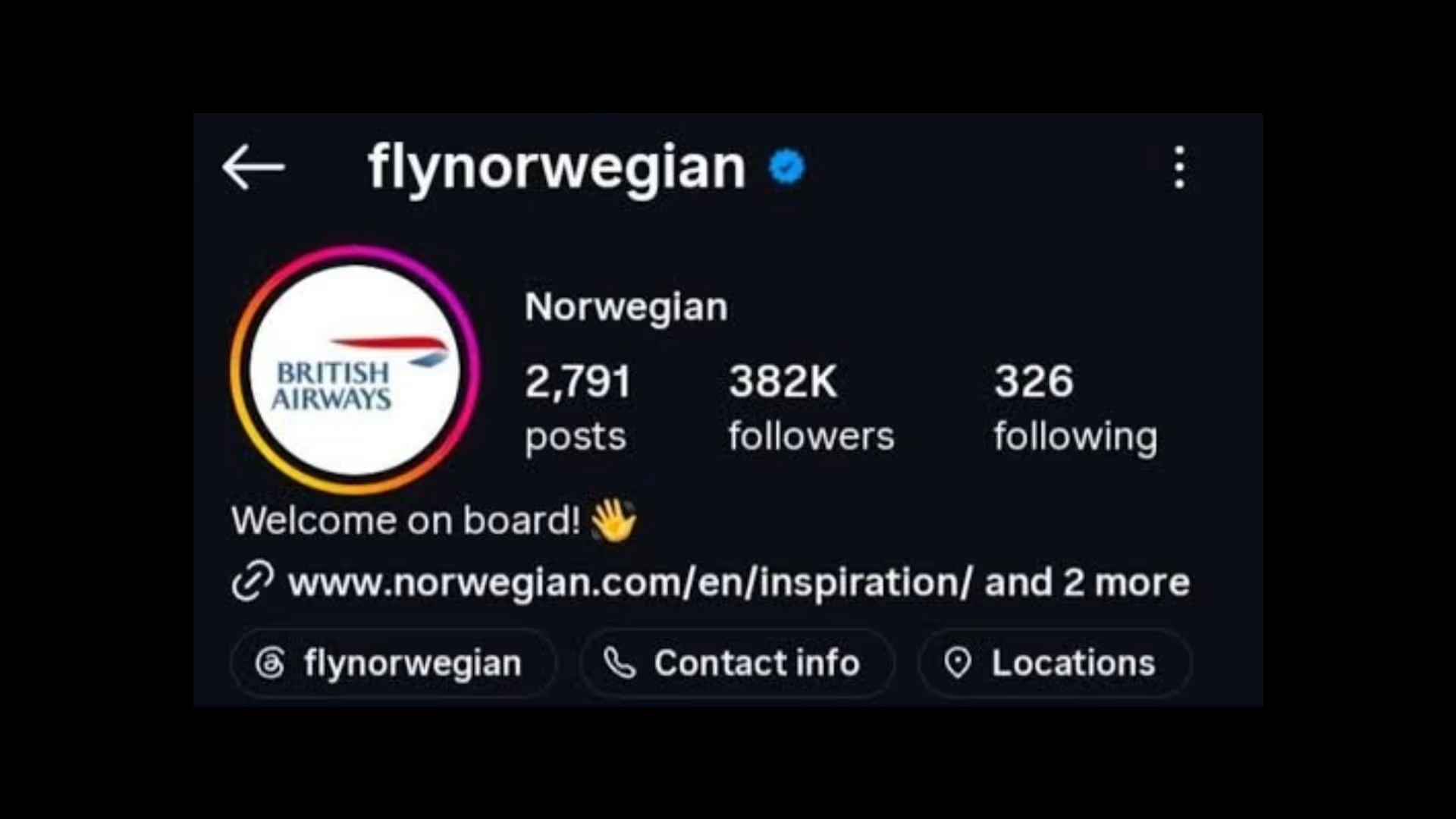
England claimed victory, and Norwegian Air honoured the bet almost immediately by swapping its Instagram profile logo for British Airways’, posting:
“While the tournament is over for us, this friendly bet will forever live in all our hearts. We wish England and @british_airways all the best in the semi-final, and we sincerely hope you’ll get to bring football home!”
The campaign did not stop there. The airline launched a 48-hour flash sale on flights from England to Norway, joked under British Airways’ posts with:
“Does this mean I can write anything I want for the next 24 hours and people will think I’m you?”
And later added:
“Thank you for a great match and a really fun few days! Now bring this World Cup all the way home! We are forever thankful that you were cool enough to accept our bet. Let’s make this friendship grow even bigger.”
After restoring its original logo 24 hours later with:
“Finally, everything is back to normal. Our social media team can rest now.”
Fans were already calling it one of the smartest brand moments of the tournament. As one user perfectly summed it up:
“They may have lost the bet, but Norwegian Air won the internet.”
This bet did not happen in a quiet corner of the internet. During the tournament, social media impressions around the World Cup rose 130%, engagement rose 160%, and video views rose 485% compared with the equivalent stage of the 2022 tournament, according to FIFA’s own tournament report. Across the same event, FIFA recorded 30 billion impressions and 1.7 billion engagements. A well-timed brand moment dropped into that river of attention travels a lot further than the same joke posted on a quiet Tuesday.
The best reactive campaigns work because speed itself has become part of how audiences judge a brand. In Sprout Social’s Q2 2026 Pulse Survey, 84% of consumers said a brand’s response speed directly shapes how they view that brand, and separate 2026 research found 73% of social users say they will switch to a competitor if a brand does not respond on social media at all. As Keith Debono Borg, Co-Founder of MPiFY, puts it, brands that win in real time are rarely the loudest ones, they are simply the ones who already trust their own tone enough to hit publish without a meeting first. That trust is what separates a clever reactive marketing strategy from a rushed, off-brand scramble.
Not every reactive moment is created equal. The Norwegian and BA wager was a planned bet, agreed before kickoff with known terms and a built-in exit plan, while a true reactive marketing strategy responds to something nobody saw coming. Here is how the two compare:
Before jumping on the next viral moment, it helps to have a few guardrails in place:
Yes, reactive marketing does not require a Super Bowl-sized budget, since Norwegian’s entire play cost little more than a wager and a handful of Instagram posts. With 5.66 billion people now active on social media worldwide, spending over 2.5 hours there daily, a small brand with a clear voice and a fast decision-maker can compete for attention against household names. This is the same principle behind a strong social media strategy for high-growth brands, where consistency and speed matter more than ad spend.
MPiFY treats moments like the Norwegian bet as proof that timing and brand identity design go hand in hand, since a logo swap only lands as a joke when the underlying visual identity is already recognisable. Our branding and visual identity team builds that recognisability first, the same instinct we explored when covering Pantone’s Colour of the Year for 2026. From there, our marketing team plans the social listening and approval process that lets a client react in minutes rather than days, while our SEO and AEO specialists make sure that momentary spike in attention keeps paying off in search and AI answers long after the tournament ends.
Reactive marketing is a strategy where brands respond quickly to a live event, trend, or piece of news instead of relying only on pre-planned campaigns.
Newsjacking is one form of reactive marketing that specifically inserts a brand into a breaking news story rather than a general trend or event.
Norwegian Air lost a pre-match wager with British Airways tied to the England versus Norway World Cup quarter-final, so it swapped its profile picture to BA’s logo as agreed.
Most successful reactive posts go out within minutes to a few hours of the trigger event, before the online conversation has moved on.
Yes, reactive marketing is often cheaper than paid campaigns and works for brands of any size as long as the response feels authentic.
The biggest risk is misjudging the tone of a sensitive moment, which can make a brand look opportunistic rather than clever.
No, reactive marketing works best as a complement to a planned strategy, not a replacement for it.


.svg)
