

Good news: you do not need a computer science degree to follow along here. Another news: 2026 calendar is so packed with tech conferences, that simply reading about it counts as cardio. According to Forrester, global technology spend will hit $5.6 trillion this year, which is a number so large it briefly broke our calculator. That figure reflects how central technology events have become. For example, MWC Barcelona 2026 alone drew 105,000 professionals from 207 countries, with AI dominating virtually every major keynote at the world’s top conferences this year. Let us explain what it all means, and which events you actually need to care about.
Table of Contents
Right, a quick bit of context before we dive in, because that kind of conference is one of those that sounds either thrilling or deeply tedious depending entirely on who you are. Think of a tech conference 2026 event less like a dreary PowerPoint festival and more like a very large, very expensive party where the guests happen to be deciding the future of your industry. Deals get signed. Technologies get announced that make last year's cutting-edge feel charmingly vintage. And the people who show up leave knowing things that the people who did not show up will spend months trying to catch up on.
We are living through what insiders are calling the "Invisible Integration" era. In plain English: AI has graduated from being a flashy party trick that impresses your boss during a demo, and is now quietly embedded into hospitals, offices, factories, and probably your microwave. This is not scaremongering. It is just the world now, and the innovation gatherings on this list are where the people steering all of it get together to compare notes. This guide is your way of being in the room without actually needing to pack a suitcase for all of them — or to start packing a suitcase!
Every January, Las Vegas performs a small miracle. For four days, a city best known for buffets and very questionable financial decisions transforms into the single most important patch of earth for anyone in technology. CES 2026 brought in more than 148,000 attendees, including over 55,000 from outside the United States and representatives from more than 60% of the world's largest companies. That is not a technology summit. That is a small well-dressed country that runs entirely on espresso and product launches.
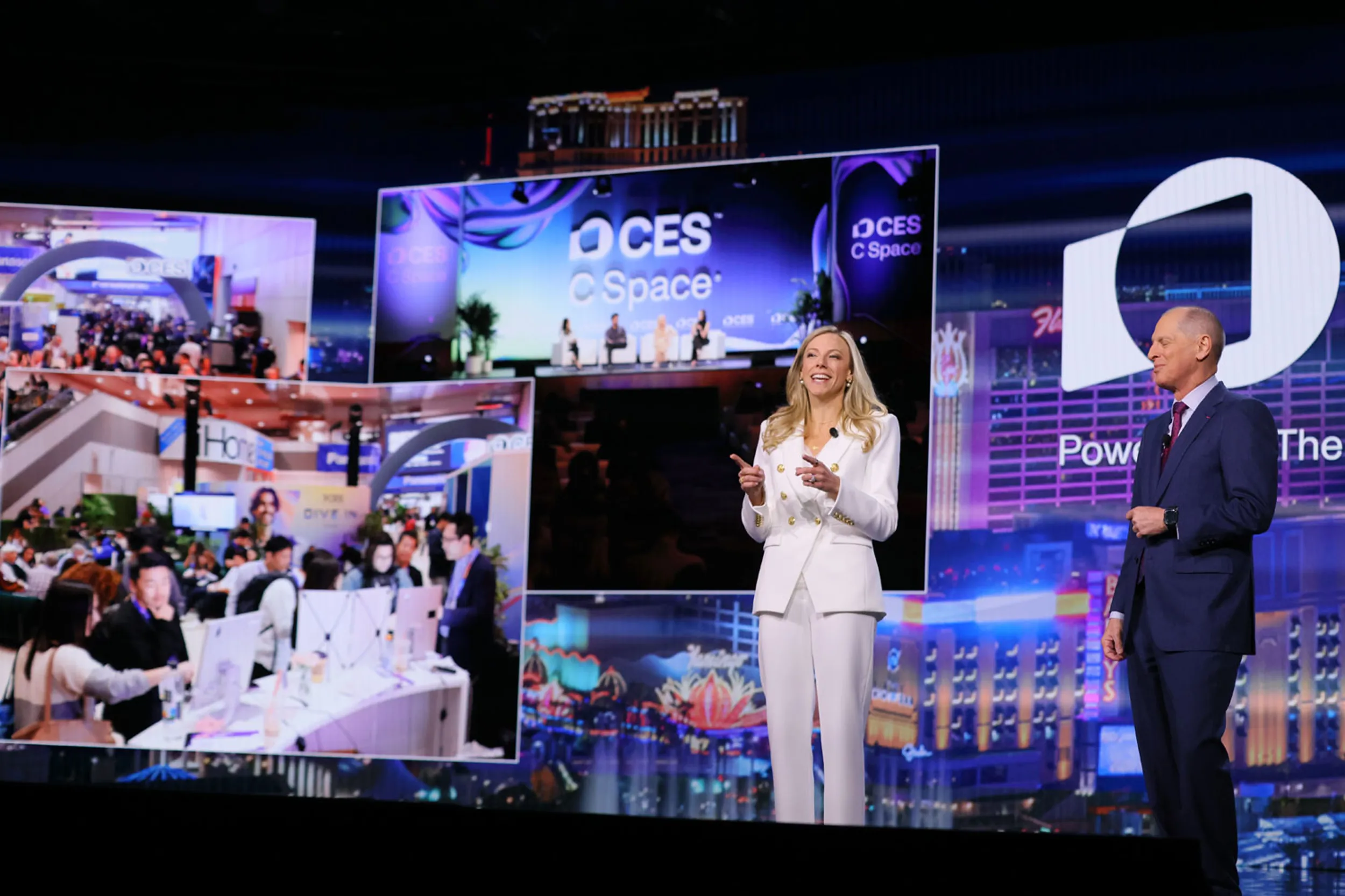
Here is what CES actually told us this year, in slightly less corporate language: the smartphone as the thing you do everything on is being quietly phased out. Organisers said the event "moved from theory to the practical application of how technology is integrating seamlessly into our lives", meaning instead of tapping a screen for everything, your environment will just sort of... know what you need. Think of it as ambient computing: your surroundings becoming clever, rather than you having to instruct a device. Wearables tracking your health in real time, AI embedded in robotics doing physical tasks, homes that anticipate your routine rather than wait for a command. Over 4,100 exhibitors and 1,200 startups showed up to demonstrate how this actually works in practice, across 2.6 million square feet of exhibit space. CES 2026 set the agenda for the entire year. Everything else in 2026 is, in some way, a response to it.
If you are not a software engineer, AWS re:Invent probably sounds like something you would ignore in a calendar invite. Let us fix that. AWS (Amazon Web Services) is the invisible infrastructure underneath a staggering percentage of the internet, and re:Invent is its annual gathering where around 65,000 developers and technical decision-makers convene to find out what is coming next. Last December's edition in Las Vegas (America really does love Las Vegas for these things) was where the entire industry declared the AI experimentation phase officially over.
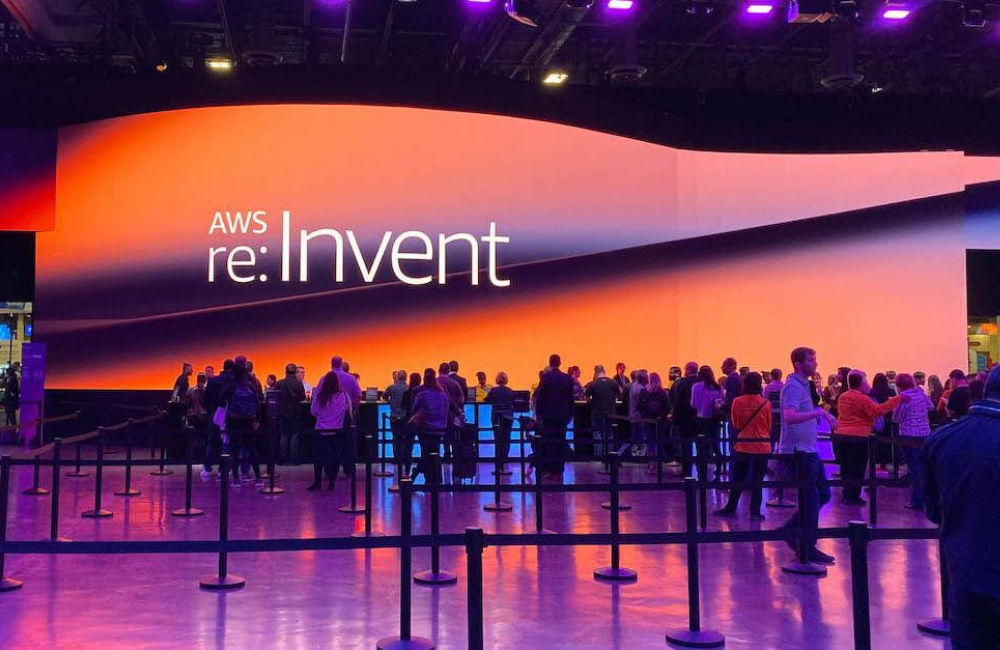
What replaced it is two things worth knowing. First, AWS Clean Rooms with privacy-enhancing synthetic dataset generation: in plain English, a way to train AI systems using sensitive shared data without anyone's private information ever being exposed. Imagine teaching a student using a photocopy of a document rather than the original. The AI learns. The original stays safe. Second: agentic AI, which means AI systems that can carry out multi-step tasks completely independently, without a human guiding every move. Not a chatbot you type questions to. An assistant that reads your brief, plans the work, executes it, and reports back. Re:Invent 2026 lands later this year, and based on recent form, it will not be short of announcements worth your attention.
You may not have heard of LEAP three years ago. Practically everyone in technology has heard of it now. In just four editions, LEAP in Riyadh, Saudi Arabia, has brought together more than 688,000 participants, 2,480 startups, 6,200 companies, and over 5,000 investors, with 2025 alone generating USD 14.9 billion in deals and announcements on the floor. To put that in perspective: that is not a conference where people hand out leaflets and hope for the best. That is a functioning economy that sets up a temporary address inside a convention centre once a year.
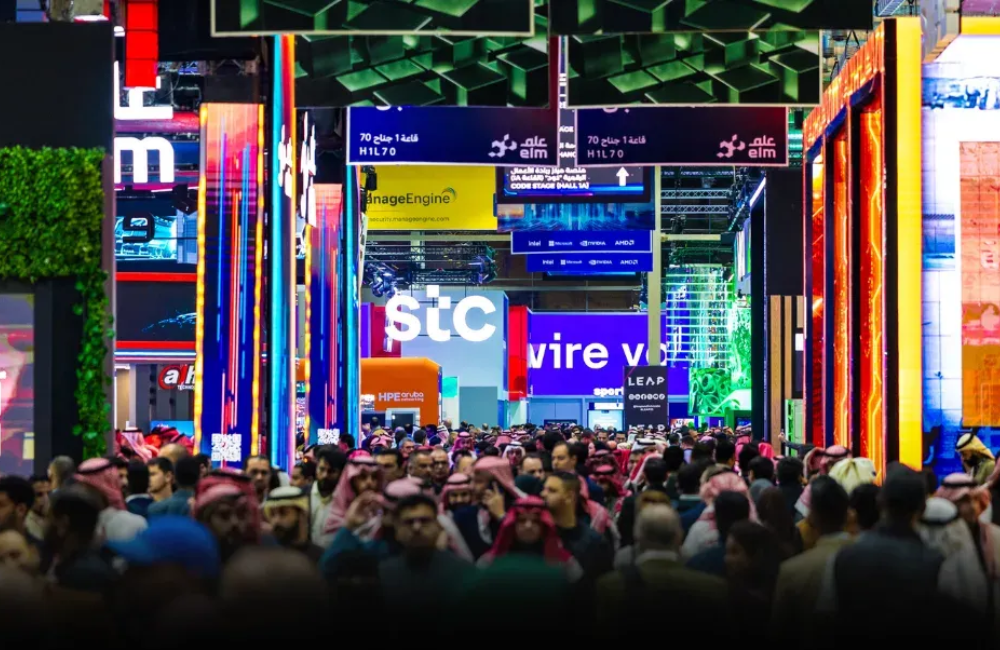
LEAP 2026 runs from 31 August to 3 September at the Riyadh Exhibition and Convention Centre (RECC) Malham, and the numbers involved are fascinating. Over 201,000 visitors are expected, with 1,800 global technology brands in attendance, more than 1,000 speakers from 52 countries, and north of 1,900 investors on the floor. For startups specifically, the Rocket Fuel Pitch Competition offers a USD 1 million prize fund across 60 tech verticals, which is rather a lot of motivation to make your slide deck legible. Alongside the main show, DeepFest runs as a dedicated AI and deep tech event for anyone who wants to go properly deep on where artificial intelligence is heading. As Jessica Wong of ewpartners put it: "Saudi has now become the new hub for global innovation. LEAP, in just under three years, has now become one of the biggest global platforms to encourage technology and innovation." That is a seasoned international investor, not a press release. The difference matters.
Obviously, LEAP is where some of the most consequential conversations in technology happen in real time, from getting top insights from the key speakers on stage, to the Tech Arena which is an immersive showcase where robotics, AI, and future-focused prototypes come to life.
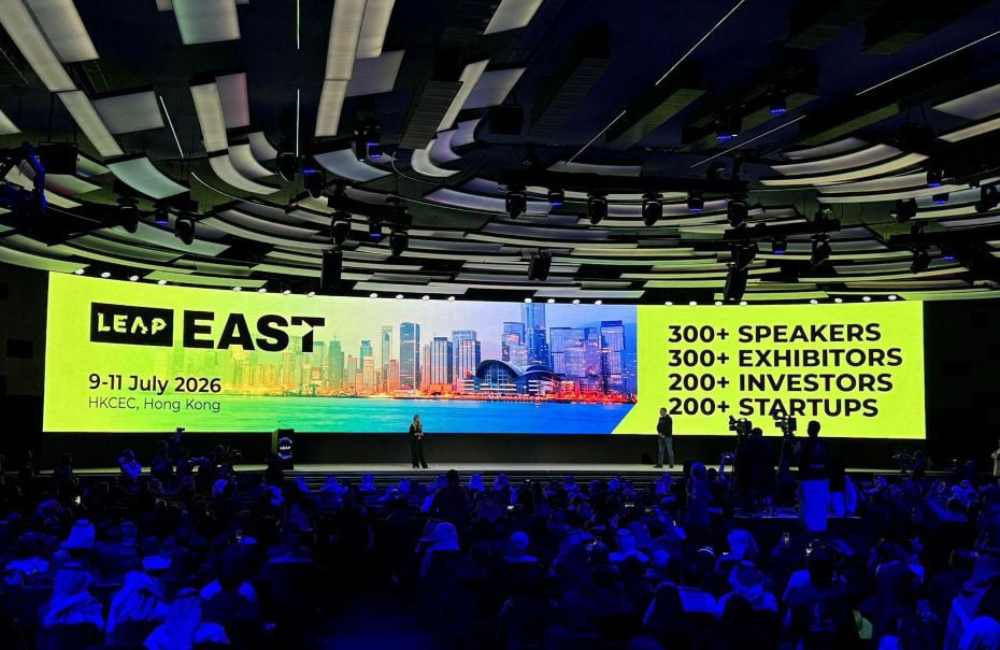
Fresh from redefining what a technology event could be in Saudi Arabia, LEAP has had the bold moves to expand to Hong Kong. LEAP East takes place on 8 to 10 July 2026 at the Hong Kong Convention and Exhibition Centre, gathering 300-plus exhibitors, more than 200 speakers and investors, and over 150 startups for three days focused on AI, deep tech, and connecting the Eastern and Western technology ecosystems in ways that simply do not happen via email. It is co-organised by the Saudi Ministry of Communications and Information Technology and the Hong Kong government, which gives you a sense of the seriousness with which both parties are approaching it. If your business has any interest in Asia-Pacific markets, or if you want to understand where the next wave of cross-border technology partnerships is forming, LEAP East is the industry event that will almost certainly surprise you.
The tech conference 2026 world does not begin and end in Nevada, tempting as it is to assume otherwise.
Web Summit in Lisbon is the beating heart of European tech investment, where thousands of founders and venture capitalists gather annually to discuss building businesses that are both profitable and, ideally, not terrible for the planet. It is earnest, it is enormous, and it is genuinely one of the most useful innovation trade shows on the calendar if you are building anything. The most recent Lisbon edition drew over 71,000 attendees from 157 countries, including a record 1,857 investors, representing a 74% year-on-year surge in investor participation. The 2026 edition runs 9-12 November.
VivaTech in Paris is a different creature entirely: glossier, more focused on retail and luxury brands going digital, and with appreciably better food in the vicinity. If your business has anything to do with how physical products meet digital experiences, this is your global tech gathering.
MWC Barcelona is the world’s most influential telecom and connectivity event. Its 20th anniversary edition this past March 2026 drew 105,000 professionals from 207 countries, including over 2,900 exhibiting companies and 1,700 speakers, with AI dominating the agenda under the theme “The IQ Era.” For anyone operating in 5G, edge AI, IoT, or enterprise connectivity, MWC is non-negotiable.
SXSW, meanwhile, is what happens when creative industries and the technology world share a venue and agree to have feelings about it together. It is one part global developer conference, one part cultural festival, and entirely worth attending if you want to understand where technology and human behaviour are heading simultaneously. The 2026 edition ran 12-18 March in Austin, Texas, drawing its usual mix of founders, marketers, and cultural strategists. It remains the one conference where technology and human behaviour are discussed in the same sentence without anyone finding it strange.
For enterprise AI specifically, The AI Summit London (10-11 June 2026) has become one of the top-tier events globally for production AI, enterprise deployment, and automation strategy. Less startup showroom, more serious operational conversation.
Across in Singapore, Tech in Asia Conference has quietly become essential for understanding one of the fastest-growing startup regions on earth. The future tech summits that matter are no longer all in the West. Asia is not catching up. In many areas, it is ahead, and global developer events like this one are where you would find out exactly how far ahead.
For businesses attending any of these events, showing up is only half the equation. MPiFY’s digital marketing and SEO/AEO services help organisations translate the intelligence gathered at the world’s top tech conferences into a sharper online presence, content strategy, and lead pipeline – particularly for companies entering or expanding in European and Mediterranean markets.
Attending a technology summit is genuinely the easy part. You show up, you listen to smart people say smart things, you collect a lanyard, eat something questionable from a catering table, and fly home feeling inspired. The hard part every good tech conference forgets to tell you is Monday morning, when you have seventeen pages of notes, a stack of business cards, and absolutely no structured plan for doing anything useful with any of it. This is not a character flaw. It is what happens when inspiration arrives without a system to catch it.

The reason why the MPiFY team attended numerous tech conferences (and will be attending the upcoming ones) is to close that gap, for our clients and for ourselves. Every session attended, every trend mapped, and every deal conversation observed during those event days gets translated into something actionable.
That is the job. MPiFY takes what happens at the world's biggest technology events and turns it into concrete strategies: a better UX design that accommodates AI integration, designing for the future, sharper SEO built around where search behaviour is heading, strategic content marketing, performance marketing aligned with the actual infrastructure shifts reshaping industries, and app development approaches informed by what the most serious players in the world are actually building right now. A conference is only as valuable as what gets done with it afterwards, and that is precisely where we come in.
The tech conference 2026 season is delivering a message that is hard to misread: the technology works, the money is moving, and the only question still open is whether your business is in a position to benefit. CES set the tone in January. Re:Invent drew the lines around cloud and AI governance. LEAP turned Riyadh into the world's most consequential innovation meeting point and then, apparently not satisfied with that, added Hong Kong for good measure. These are not events where people talk about the future in the abstract. They are where future tech summits go from concept to calendar entry, and where the gaps between businesses that are ready and businesses that are catching up get quietly decided.
You now know which events matter most, what the ones you missed actually said, and where to find a team willing to turn all of this into something that makes a real difference to your bottom line. The rest is just showing up.
AI has moved from experimentation to full integration across industries, from cloud to robotics and ambient computing.
CES sets the tone, AWS re:Invent defines cloud and AI infrastructure, and LEAP drives global innovation momentum.
Massive deal flow, global investors, and serious scale have turned it into a key innovation hub, not just an expo.
In-person access speeds up partnerships and insight, but execution after the event is what truly counts.
MPiFY converts event insights into actionable UX, SEO, strategic content marketing, performance marketing, and app strategies aligned with real industry shifts.
VivaTech runs 17-20 June in Paris, LEAP 2026 takes place 31 August to 3 September in Riyadh, The AI Summit London is scheduled for 10-11 June, Web Summit returns to Lisbon on 9-12 November, and Slush takes place in Helsinki on 18-19 November. Tech in Asia Conference in Singapore is also worth tracking for anyone with interests in the Asia-Pacific market.


.svg)
