


Brand Personality Marketing Lessons from Duolingo x Apple
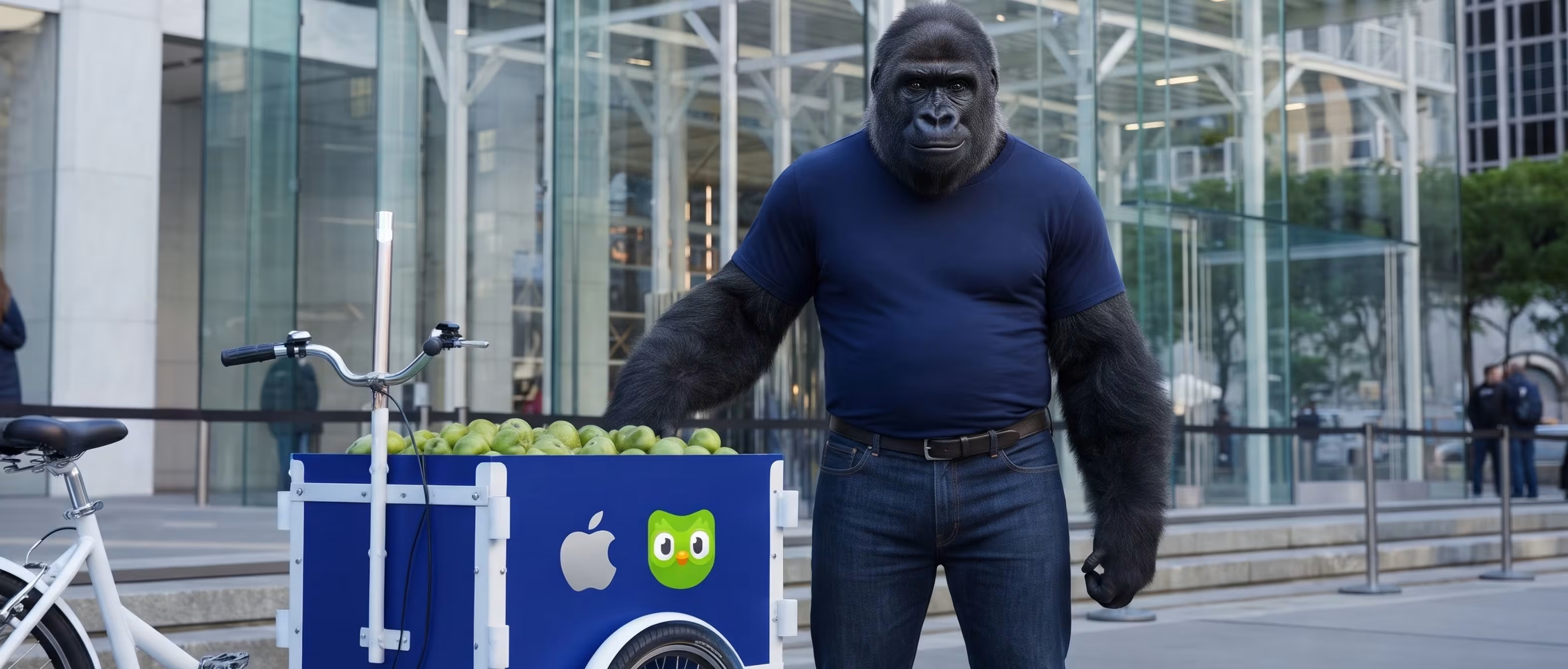
Brand personality marketing is the art of making a company feel like someone you would actually text back, and Duolingo just ran a masterclass using a free apple. When Apple launched the iPhone Duo, Duolingo's green owl turned up outside an Apple Store with a cart of free fruit, and the internet did the rest.
Table of Contents:
- What Happened with Apple Duo?
- Was This Really a Collaboration?
- Why Does Brand Personality Win?
- How Duolingo Built Its Persona
- Can Mascot Marketing Scale?
- How Does It Compare?
- Borrow This Personality Playbook
- 1. Start by defining three traits
- 2. Look for cultural moments
- 3. Give people one obvious next step
- Brand Personality Marketing Dos & Don’ts
- Is Personality Marketing Risky?
- What Should Your Brand Do?
What Happened with Apple Duo?
The Duolingo mascot gave away free green apples outside an Apple Store in New York on 23 October 2026, the day the iPhone Duo went on sale. The owl set up a cart with Duo stickers that said "Do your lesson" and a QR code, turning curious shoppers into potential app users. Honestly, that is one way to make fruit work harder than most marketing budgets.
Meanwhile, Apple's phone starts at $1,999 in a foldable niche that is still under 5% of the smartphone market. Marketer Mitchell Duffree summed it up on LinkedIn: shoppers might forget their errand, but they will remember the owl. And that is the difference between attending a launch and becoming part of the story.

Was This Really a Collaboration?
No, this was an unofficial stunt, and that is precisely why it worked. There was no formal Apple partnership. Duolingo simply spotted a naming coincidence and ran with it. No lengthy negotiations or awkward calendar invites required.
The brand contrast made the joke even better. Apple sells premium hardware, while Duolingo champions free language learning. One asks for two thousand dollars; the other hands you an apple and reminds you to finish your Spanish lesson. The positioning practically writes itself. Think of it as a collaboration Apple never RSVP’d to, with Duolingo turning up with snacks.
Why Does Brand Personality Win?
Brand personality wins because people connect with recognisable characters faster than generic corporate messaging. Humour makes that introduction easier, especially when audiences have approximately three seconds of patience and 47 unread notifications.
A February 2026 survey of 1,000 US adults aged 18 to 27 found that 67% enjoy comedy and memes. Meanwhile, Morning Consult found that 94% of tracked brands score lower on net trust with Gen Z than with US adults overall.
In other words, younger audiences are not handing out trust like free supermarket samples. A well-timed joke can still earn a second look, a share or a conversation. Duolingo’s stunt worked because the humour felt natural to the brand, rather than like a desperate attempt to look cool.
How Duolingo Built Its Persona
Duolingo built its persona by treating its green owl as an ongoing character rather than a logo with feathers. Its recognisable attitude and consistent humour give audiences something familiar, even when the campaigns change.
The numbers are impressive: Duolingo reached 58.7 million daily active users in Q2 2026, up 23%, while its social accounts generate more than one billion organic impressions each quarter. The company also credits product changes and a one-time streak revival event, so the owl is not carrying the entire business on its feathery shoulders. Still, it is a brilliant front door.
As Justin Ciappara, Co-Founder at MPiFY, explains:
“A mascot is a promise to behave consistently. Duolingo keeps that promise even when the joke costs almost nothing, and that consistency is the real brand marketing asset.”
That consistency matters. A mascot becomes valuable when audiences recognise its personality, even when they cannot predict what it will do next.
Can Mascot Marketing Scale?
Yes, mascot marketing can scale when the character follows clear rules rather than relying on random inspiration. Duolingo works with hundreds of creators worldwide, so maintaining its voice requires more than telling everyone to “make it funny”.
Creators need to understand what the owl would say, what it would never say and where cheeky becomes uncomfortable. That is the same principle behind a solid brand voice guide, which we also explore in our article on keeping your generative AI brand voice from going robotic.
Without clear guidelines, your brand personality can quickly become a game of corporate telephone. If your entire voice lives inside one social media manager’s head, congratulations: you have created a single point of failure.
How Does It Compare?
Duolingo’s stunt shows how a small cultural coincidence can become a memorable activation without a massive production budget. The winning formula was simple: timing, a recognisable mascot, a shared name and an easy-to-understand joke.
Similar lessons appear in our breakdown of how Norwegian Air won by losing and the best newsjacking examples from Tesla’s flying car launch. Both show how brands can benefit from reacting while people are still paying attention.
The lesson is not that every business should start handing out fruit outside competitors’ shops. Please do not make your marketing team source 500 bananas next week. Instead, find a relevant moment, connect it naturally to your brand and give people something worth sharing. Your brand strategy fundamentals should provide the foundation.
Borrow This Personality Playbook
Brands can borrow the moves from Duolingo: choose three personality traits, find a relevant real-world hook, keep the activation simple and attach one clear action.
Duolingo’s hook was a shared name, its giveaway was an apple and its call to action was “Do your lesson”. No complicated competition mechanics or 14-step sign-up process. The joke made sense instantly.
- Start by defining three traits that suit your brand and audience, whether that means witty, curious and straight-talking or reassuring, knowledgeable and rebellious.
- Look for cultural moments that genuinely connect to your product or industry. You do not need to jump on every trending topic like a marketer chasing the algorithm at 2 am.
- Give people one obvious next step, such as scanning a QR code, visiting a page or trying your product. Personality attracts attention; a clear action gives that attention somewhere useful to go.
Brand Personality Marketing Dos & Don’ts
Brand personality marketing works best when creativity has sensible guardrails. You want people to recognise your brand, not wonder which company has taken over your social accounts this week.
Do:
- Define three personality traits and apply them consistently.
- Make humour relevant to your audience and product.
- React quickly when a cultural moment fits your positioning.
- Keep campaigns simple, memorable and easy to share.
- Establish tone-of-voice guidelines and clear business objectives.
Don’t:
- Copy another brand just because its posts go viral.
- Jump on every trend without a genuine connection.
- Confuse being provocative with being memorable.
- Ignore sensitive topics or potential audience reactions.
- Assume engagement automatically translates into sales.
The sweet spot is a personality that feels natural enough to entertain and structured enough to repeat. Think organised chaos, not your marketing team inventing a new identity every Monday.
Is Personality Marketing Risky?
MPiFY would say yes, because personality marketing can backfire when a brand borrows an inauthentic voice or makes jokes without considering the audience. Humour is subjective, and what works for one business can look painfully awkward for another.
Even Duolingo’s banter has an edge. When Samsung tried to claim the owl as an ally, Duolingo snubbed it with an "ugly stranger" jab. The exchange showed that its personality includes deciding whom to engage with, rather than chasing every opportunity for attention.
However, this approach works partly because audiences already understand Duolingo’s character. A brand without an established playful voice cannot necessarily make the same joke and expect the same reaction. That is why MPiFY develops brand guidelines with tone rules, red lines and approval processes before campaigns go live. Guardrails do not kill the fun; they stop the fun from becoming a crisis meeting.
What Should Your Brand Do?
Start with a personality audit: define three traits, test them in one channel for a month and keep what your audience genuinely responds to. Focus on what people remember, repeat and share rather than celebrating every like as a business victory.
Then bring that personality into your wider brand experience. Your website, social content, campaigns and customer communications should feel connected. A hilarious social post followed by a painfully generic website is quite the plot twist.
Full-service digital creative agency MPiFY helps connect the dots. Our branding services shape your identity, our marketing services turn it into campaigns focused on bookings and enquiries, and our SEO and AEO services help search engines and AI tools discover, understand and cite your brand story.
No owl costume required, although we will not stop you.
Ready to give your brand a personality people remember and repeat at dinner? Start a conversation with MPiFY, and let’s build something worth sharing.
FAQ
Did Apple and Duolingo officially collaborate?
No, Duolingo ran an unofficial stunt with no partnership with Apple.
What was Duolingo's Apple Duo stunt?
Duolingo gave away free green apples with "Do your lesson" stickers outside an Apple Store on launch day.
What is brand personality marketing?
It is promoting a brand through a consistent, human-like character, voice and humour rather than product claims alone.
Why did the free apples work so well?
They turned a shared name into a cheap, shareable story that reinforced Duolingo's free positioning.
Can small businesses use personality-driven marketing?
Yes, because a clear voice and one well-chosen hook cost far less than a big media budget.
Is trendjacking safe for every brand?
No, it works best when the brand already has a recognisable voice and clear guardrails.
How can MPiFY help with brand personality?
MPiFY combines branding, marketing, and SEO/AEO to build a personality and get it found and cited.
Key Takeaways
- Duolingo's unofficial Apple Duo stunt stole attention from a $1,999 phone.
- Foldables are still under 5% of the smartphone market
- 67% of surveyed US Gen Z adults enjoy comedy and memes.
- 94% of tracked brands score lower on net trust with Gen Z than with US adults overall.
- Duolingo reached 58.7 million daily active users in Q2 2026, up 23%.
- Duolingo's social accounts pass one billion organic impressions each quarter.
- A personality works when it is consistent, cheap to repeat and backed by clear guidelines.
Read MPiFY first on Google

Keep reading



CONNECT WITH MPiFY
CHAT WITH US TODAY


