


Justin Ciappara: The AI-Driven Founder Behind MPiFY
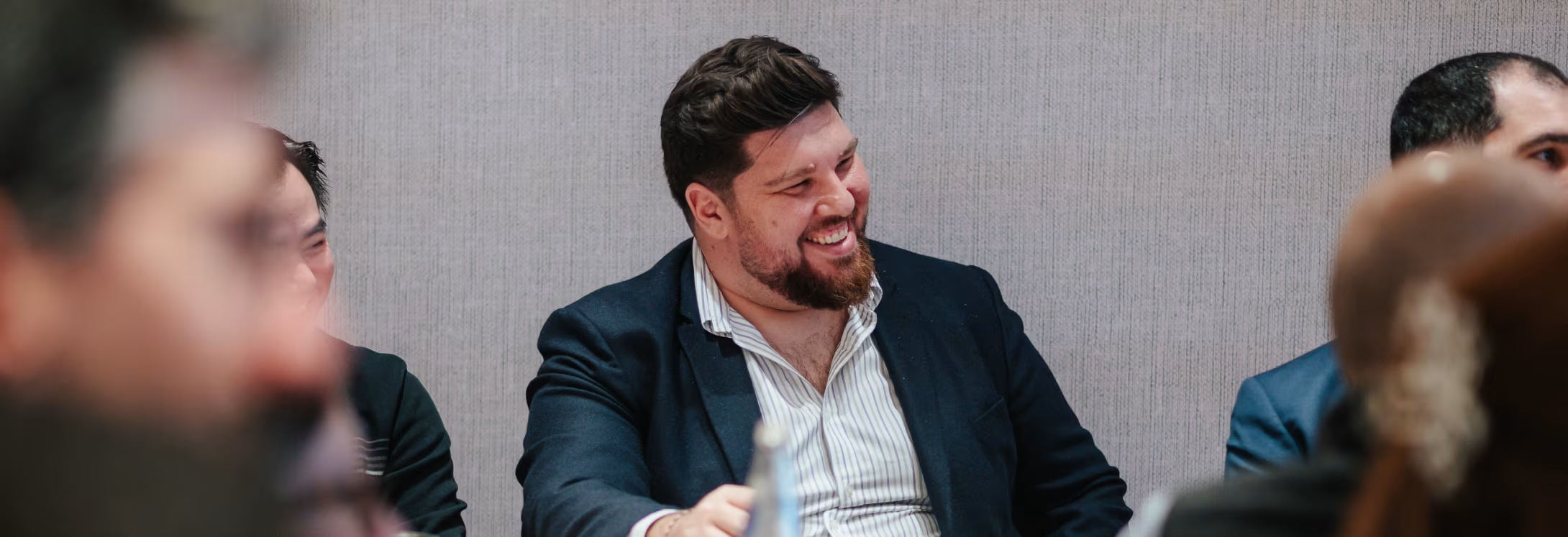
For Justin Ciappara, calling an agency AI-driven should mean more than using AI search tools as an extended Google Search. That distinction sits at the centre of how he wants to build MPiFY as an AI-driven digital creative agency, with his creative oversight as a Co-Founder and Creative Director.
Table of Contents:
- Who is Justin Ciappara?
- Learning the Craft by Doing It
- How iGaming Shaped Justin
- The Side Projects
- Burnout, Bali, and One Condition
- Why is Justin an AI-Driven Founder?
- Where Does Justin Draw the Line on AI?
- Why Does Friction-Free Design Matter?
- Justin’s Practical Design Rules for Businesses
Who is Justin Ciappara?
Justin Ciappara is the Co-Founder and Creative Director of MPiFY, a digital creative agency working with clients across Malta, the UK and the UAE. His career spans from branding and UI/UX, to graphic design and photography, across iGaming, finance and fashion.
Alongside Co-Founder and Managing Director Keith Debono Borg, he runs the agency on a fairly clean split: Keith handles management and finance, Justin handles creative and direction. Rather than focusing on making MPiFY a bigger studio, Justin is more interested in making it a more automated agency.
"We are a long way off. But we'll get there," he says.
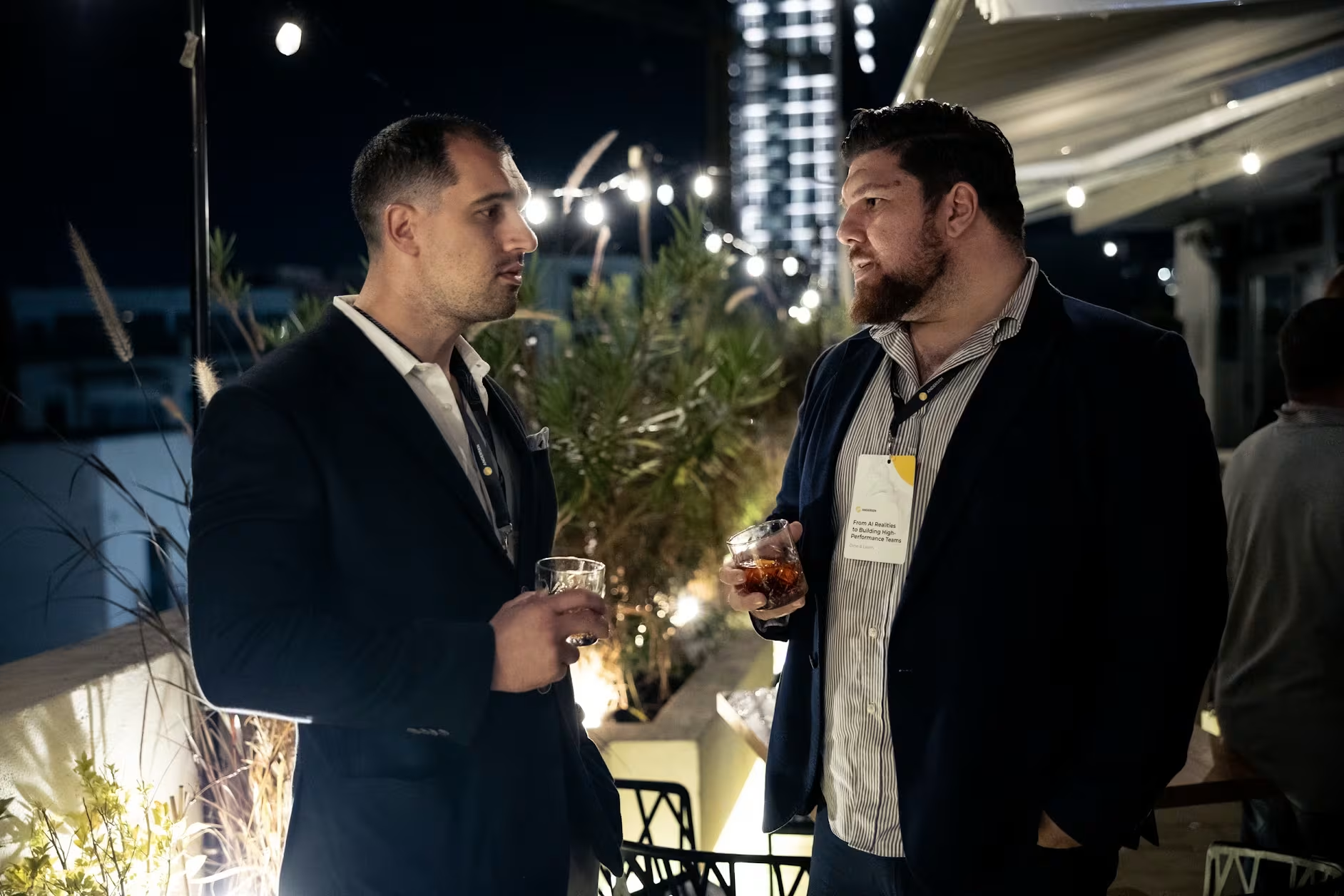
Learning the Craft by Doing It
What actually built the skill was fifteen years of holding down a full-time job while freelancing on the side. Design by day, photography at weekends, two careers running in parallel for over a decade.
Justin's first formal qualification was a National Diploma in Programming and Networking at MCAST, which explains the technical thread that still runs through his design work, the reason why he easily understands what he is asking a developer to build. Graphic Design and UX/UI certifications followed through the Interaction Design Foundation to strengthen his skillset
Although he is very unsentimental about all of this!
"If I wanted to be a doctor, then yes, study, and study properly. But creativity does not work like that. You get your hands dirty. You practise. You do a lot of work, good and bad and you keep going. Nobody has ever hired me because of a certificate.”
How iGaming Shaped Justin
iGaming is a useful place to grow quickly, first because it is an international industry and also because the feedback is immediate and numerical. A casino rebrand of a simple promotion either converts or it does not, and nobody is interested in your reasoning if it does not.
Justin spent several years in senior in-house design roles across the iGaming sector, at operators including Amaya, Jackpotjoy and White Hat Gaming, working on brands such as Vera&John and SkolCasino. He led multiple rebrands of gaming platforms from a user experience and interface, he also produced a constant stream of promotional work that operators at that scale run through every week: campaigns, email templates, print collateral.
It also taught him that the hardest part of a rebrand is rarely the design itself. More often, it is getting twelve people with twelve different opinions to agree before anything actually ships.
The Side Projects
Two of Justin's most widely seen pieces of work were not for clients at all.
During COVID he mocked up what a face mask would look like if Apple designed one. It was a concept, made mostly out of curiosity. It went viral, picked up by 9to5Mac, and by a large number of Chinese tech sites and YouTube channels he still cannot read.
The Revolut dark mode had the longer tail. The company liked the posts enough to get in touch with Justin, which then turned into an interview.
"They were looking for a senior product person to improve the whole banking experience. I did not have enough experience for that role, and honestly I would not have been comfortable taking such job. It was still one of the best calls I ever had."
Both projects came from the same instinct that now shapes MPiFY. A client brief gives you a defined problem. A concept gives you room to question whether that problem was framed properly in the first place, and occasionally the company you are redesigning agrees with you.
Burnout, Bali, and One Condition
After more than fifteen years of doing two jobs at once, Justin went fully independent for a couple of years as a full-time photographer and freelance designer. The photography half had gone about as far as it could reasonably go, with years shooting Malta Fashion Week, and at one point Justin got a great opportunity to shoow the Versace show in Milan. It went well, which was the problem.
Justin has never been good at saying no to work. That is a lovely quality right up until it isn’t, according to him.
He experienced a burnout. In 2023 he made what he describes as a very brave financial decision, in the tone of someone who means the opposite: moved to Bali for a year. He put the cameras away for good, kept two design clients, and then he took a break from work for six months.
Throughout it he stayed in contact with Keith. Eventually they saw bigger potential in opening an agency and Justin agreed that he would only come back to Malta if the two of them launch MPiFY
He landed back in Malta in May 2024. MPiFY was formed the following week.
Why is Justin an AI-Driven Founder?
Justin is described as an AI-driven founder, a phrase he is slightly allergic to, mostly because of who else is using it.
"Most people aren't really using AI to its full potential. They're using it as an extended Google search and talking like they know everything. The useful part of any tool starts just past the point where most people stop."
Justin Ciappara, Co-Founder & Creative Director, MPiFY
That scepticism is backed by a wider problem with AI adoption. McKinsey’s 2025 State of AI survey found that almost nine in ten organisations now use AI regularly, yet only around a third have scaled it across their operations rather than trialling it in isolated pockets.
What that looks like at MPiFY is a set of purpose-built agents rather than a subscription list. The Malta-based digital creative agency has built its own tooling for writing proposals, running deep research, handling internal automations and producing social media design. Justin is currently building one to sort his inbox, on the theory that he might see the bottom of it one day.
He is candid about the trap in all of this, and it is not a technical one.
"My mind does not come with a queue. Every idea arrives at the same time and every one of them feels urgent. AI makes starting things almost free, so it is very easy to have ten half-built projects and nothing finished. Learning to close one before opening the next has been harder than learning any of the tools."
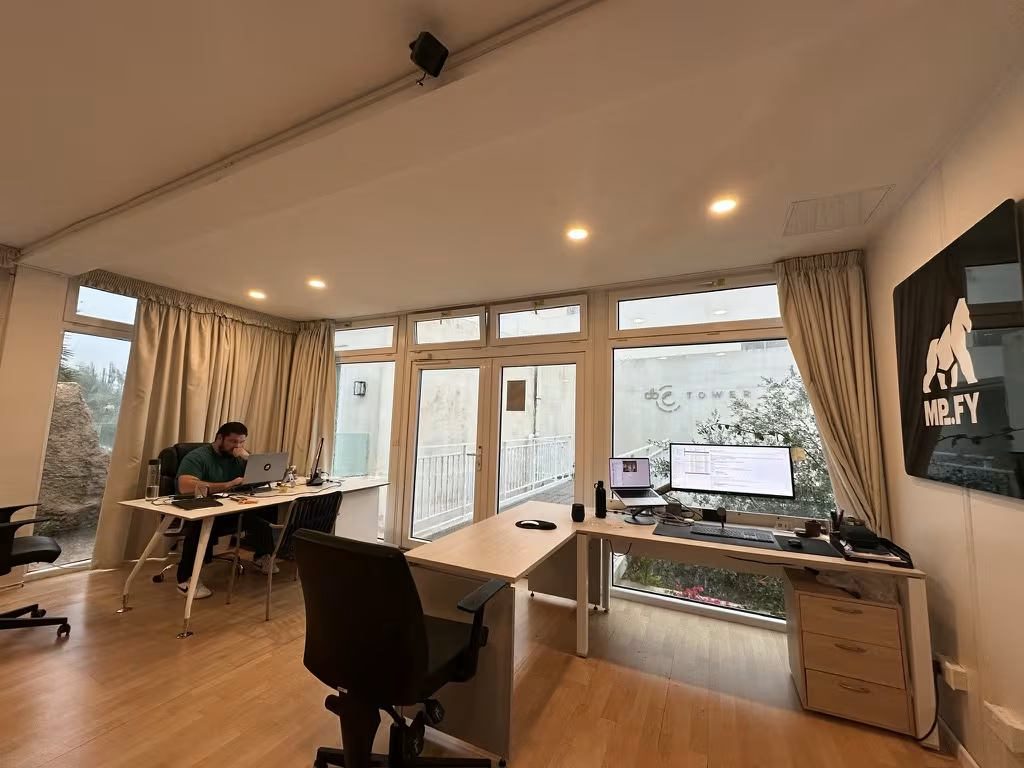
Where Does Justin Draw the Line on AI?
Justin does not see AI at MPiFY as a replacement for people. It is not human versus machine. The useful distinction, in his view, is between work that requires judgement and work that mainly involves repetition.
"I am still sceptical about AI and creativity, and I still put my own hands on that part. But once the main UI/UX is decided, building the ten internal pages that follow the same system is repetitive work. That is exactly where AI should be."
That is also why he is not particularly impressed when agencies lead with a list of AI tools. The interesting part is what those tools are actually being used to solve.
In that sense, MPiFY brings together the different strands of Justin’s previous career and enhances them with automation. The team at MPiFY still plays a big role as decision makers.
Why Does Friction-Free Design Matter?
For Justin, good design is not simply about making a website look polished. It is about making things easier for the people using it. A redesign might look great in a presentation, but that does not tell you whether visitors can find what they need, understand the message, or complete an action without getting stuck.
"The main design question should be: how much friction does this remove before someone trusts us with their business growth?"
—Justin Ciappara, Co-Founder & Creative Director, MPiFY
That is also why he takes a different view of the saying, “the client is always right”.
“‘The client is always right’ does not survive with creative work. Of course you listen. The requirements are theirs, the business is theirs, and they know it better than I do. But they came to us because we know something they don’t. When a client insists on changing a small detail, it is rarely just that detail, it breaks the continuity of the whole design.”
There is plenty of evidence that websites still have a long way to go when it comes to usability and accessibility.
WebAIM’s 2026 audit of the top one million homepages found detectable accessibility failures on 95.9% of them, up from 94.8% the year before, averaging 56.1 errors per page, almost always the boring things: low contrast, missing form labels, links that say “click here”.
MPiFY breaks several of these down further in its guide to UX design principles. And most of the web is now read on a phone: Statcounter’s global stats put mobile ahead of desktop at 53.41% of worldwide browsing share as of July 2026, where a confusing menu stops being an inconvenience and becomes the reason someone leaves.
AI can find those problems in minutes now. Knowing which three of the forty are worth fixing this quarter is still the job, and that part has not been automated yet.
Nobody has ever emailed a company to compliment its navigation. The clearest sign a design is working is that nobody mentions it at all.
Justin’s Practical Design Rules for Businesses
Based on Justin's experience across iGaming, branding and UX, here is what he would tell a business before it briefs a designer.
Do
- Audit real user behaviour before trusting instinct on a redesign
- Treat accessibility as core UX, not a checkbox added at the end
- Design mobile-first, since most of your visitors already are
- Use AI to speed up audits, research and repetition, then have a human review it
- Prototype and test the flow before committing to final visuals
- Hire people whose judgement you are willing to be overruled by occasionally
Don't
- Judge a design purely on how it looks on launch day
- Let a heavy hero image slow the page down for the sake of polish
- Skip contrast and label checks before shipping
- Assume a redesign is finished because it looks good in Figma
- Change small details late without asking what they were holding together
The common thread is simple: test the experience, not just the appearance. If a redesign works, people should understand the business faster, find what they need more easily and complete whatever brought them to the site.
MPiFY applies exactly this discipline across its web design and UI/UX work, with businesses in Malta, the UK, the UAE, and further afield welcome to get in touch for a strategy call.
FAQ
Who is Justin Ciappara?
Justin Ciappara is the Co-Founder and Creative Director of MPiFY, a Malta-based digital creative agency, and an AI-driven founder building the agency around automation.
What industries did Justin work in before MPiFY?
Branding, UI/UX and design across iGaming, finance, and fashion, alongside a long-running freelance photography career.
What kind of projects did Justin lead in iGaming?
Full platform rebrands and ongoing campaign work during senior in-house roles at operators including Amaya, Jackpotjoy and White Hat Gaming, on brands such as Vera&John and SkolCasino.
What are Justin's best-known personal projects?
An Apple-designed face mask concept that went viral during COVID and was covered by 9to5Mac, and a Revolut dark mode he designed before Revolut released their own, which led to an interview with the company.
Why did Justin co-found MPiFY?
After burning out as a full-time freelancer, he spent a year in Bali and told Keith Debono Borg he would only return to Malta if they started an agency together. He came back in May 2024 and MPiFY was formed a week later.
How does Justin use AI as a founder?
MPiFY builds its own AI agents for proposals, research, automation and social media design, keeping creative judgement with people and giving repetitive execution to the machines.
What is Justin's design philosophy?
That design should be judged by how much friction it removes, not by how attractive it looks, and that AI should serve that goal rather than replace the judgement behind it.
Key Takeaways
- Justin Ciappara has 15+ years of design experience across iGaming, finance, fashion, and photography
- MPiFY was formed in May 2024, after Justin returned back to Malta
- Nearly 90% of organisations regularly use AI, but only around one-third have scaled it
- MPiFY uses purpose-built AI agents for proposals, research, internal automation, and social media design
- Accessibility failures found on 95.9% of the top one million homepages in 2026
- Average homepages contained 56.1 accessibility errors, up from 94.8% failing in 2025
- Mobile accounted for 53.41% of global browsing share in July 2026, reinforcing Justin’s friction-free, mobile-first approach
Read MPiFY first on Google

Keep reading


CONNECT WITH MPiFY
CHAT WITH US TODAY


